Tag: Vendor Selection

Choosing between platform archetypes, and testing the top requirements live rather than accepting written responses.

  • The enterprise DAM requirements checklist, without the vendor bingo

    The enterprise DAM requirements checklist, without the vendor bingo

    Somebody circulates the requirements matrix. It has 240 rows, gathered from every stakeholder who was asked, and every row is genuinely something someone wants. It goes to five vendors. All five score above ninety percent. The decision gets made on which demo felt better.

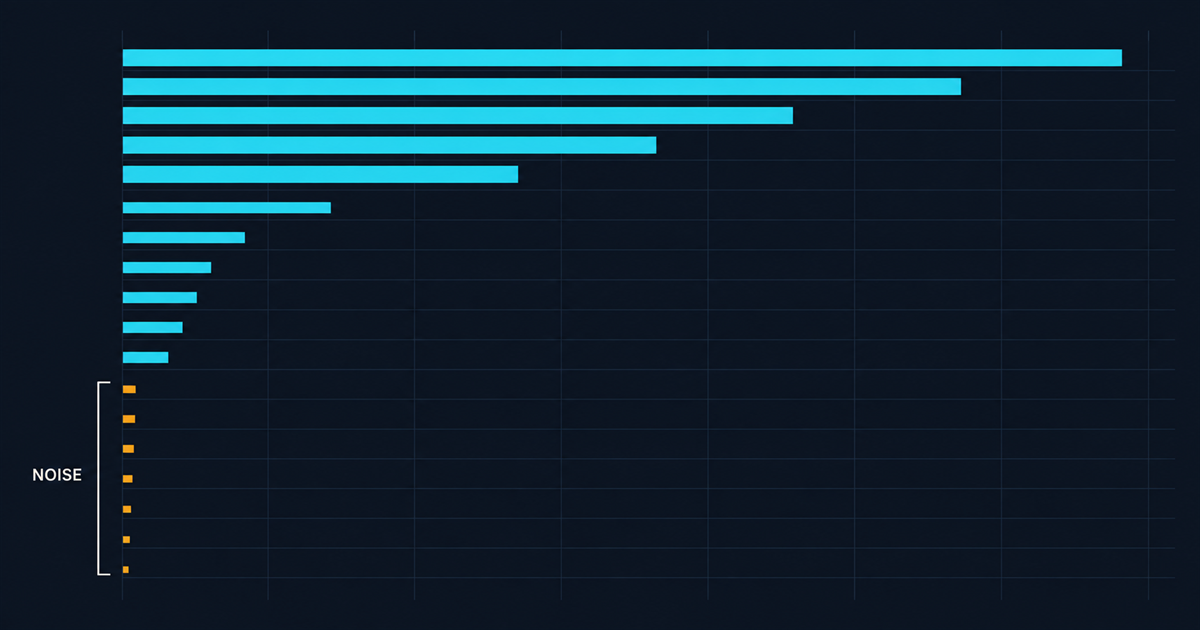
    Short answer: a requirement only earns its place if a credible vendor could fail it. Most of a standard DAM matrix is table stakes that every serious platform satisfies, which means it contributes nothing except weight. Cut to the thirty or so requirements that actually separate the field, weight them by what you do rather than by who asked, and test the top ten rather than accepting a written answer.
    A requirements scoring chart with five dominant cyan bars at the top, a thin middle group, and seven amber hairlines at the bottom bracketed as noise

    The test for whether a requirement belongs

    One question: could a vendor you would seriously consider fail this?

    “Supports metadata” fails the test. Everyone supports metadata. “Enforces field-level validation on every API write path, not only in the upload interface” passes, because plenty of platforms do not.

    Apply that question to your matrix and it will lose sixty to eighty percent of its rows. What remains is a document that discriminates, which is the entire purpose.

    Two secondary tests worth applying to the survivors:

    Is it observable? If you cannot design a test that demonstrates it, you will accept a written assurance, and written assurances are all identical.

    Does it follow from something you actually do? Every requirement should trace to a workflow, an obligation, or a system in your estate. Requirements with no traceable origin came from a template.

    The requirements that discriminate

    Thirty-two, in six groups. Ordered so the highest-signal group comes first.

    Architecture and API

    • Is the vendor’s own interface built on the public API? Check the browser network tab during the demo. Private endpoints mean a second-class API forever.
    • Can you define fields, types and controlled lists over the API, and are they enforced on every write path?
    • Is search a queryable expression over your own fields, with boolean composition, sorting and pagination past a thousand results?
    • How many SDK languages, and are they first-party and current?
    • Are derivatives produced on request from a URL, or pre-generated and stored?
    • Are delivery URLs versioned and immutable, so a replaced master produces a new address rather than requiring a purge?
    • What events are emitted, and can they be subscribed to?

    The reasoning behind this group is in headless DAM, and it is the group that predicts your integration cost over five years.

    Metadata and taxonomy

    • Are fields typed, with real dates and controlled lists, or is everything a string?
    • Can a field be conditionally required based on the value of another field?
    • Are controlled vocabularies managed as first-class objects, with synonyms, preferred terms and deprecation, in the sense ANSI/NISO Z39.19 means it?
    • Can a term be retired and existing assets remapped without deleting data?
    • Is automated analysis available on ingest, and can its output be directed to specific fields rather than a generic tag bag?
    • Can you export the full schema and all values, in a documented format, without vendor assistance?

    That last one is an exit requirement and it is the one vendors are least comfortable with, which is exactly why it belongs. The field model these support is in the metadata schema an enterprise actually needs.

    Rights and lifecycle

    • Are licence terms structured fields with indexed dates, rather than a document attachment?
    • Does expiry change asset state automatically, or produce a report?
    • Does expiry emit an event that downstream systems can act on?
    • Are lifecycle states configurable, and is state exposed as a search facet?
    • Is version history automatic, with old versions resolvable?
    • Can you identify every asset depicting a given person, for privacy request execution?

    Details in rights and expiry as first-class asset data and the asset lifecycle.

    A checklist sheet with confident cyan ticks at the top, amber handwritten question marks in the middle, and the last third folded out of sight

    Security and identity

    • SSO via SAML or OpenID Connect, with group membership driving roles?
    • Does deprovisioning happen automatically when the directory record is terminated?
    • Can external accounts be time-bound with a required internal sponsor?
    • Does the audit log record reads and downloads, not only writes?
    • Is the log exportable to your SIEM, and immutable to administrators?
    • Can delivery be restricted so an unlisted URL is not an open one?

    The one to test rather than ask about is deprovisioning. Take a real recent leaver and check. Full set in access control, SSO and audit trails.

    Delivery

    • Automatic format selection per browser, from one URL, covering AVIF and WebP?
    • Automatic quality, tuned per image rather than a global setting?
    • Content-aware cropping that keeps the subject?
    • Arbitrary width on request, for responsive images at widths you cannot know in advance?
    • What cache headers are set by default on derivatives?
    • Does the delivery API return descriptive metadata, including alt text, alongside the asset?

    That last one is missing far more often than you would expect and it is why so many properly-described libraries produce pages with empty alt attributes. Covered in delivery is part of your DAM.

    Commercial and operational

    • Is pricing published, and what is the overage rate in writing?
    • Is renewal uplift capped in the contract?
    • What is included in implementation, specifically, and what is time and materials?
    • What is the documented exit path: full asset and metadata export, in what format, at what cost?

    What to leave out

    Four categories that consume evaluation effort and produce no separation.

    Anything every vendor does. Upload, folders, search, preview, download, basic permissions, collections. Table stakes. Listing them makes the document longer and the decision no clearer.

    Interface preferences. “Intuitive user interface” is not a requirement, it is a judgement, and it will be made in the demo regardless of what the matrix says. Handle it with a structured usability test on real tasks, scored separately.

    Requirements derived from your current system’s quirks. “Must support our seven-level folder hierarchy” encodes a problem rather than a need. Ask what the hierarchy is for, and most of the time the answer is faceted search, as in designing a taxonomy people actually use.

    Features nobody has asked for and nobody will configure. Every unused capability is licence cost and configuration surface. If no named person will own a feature, it is not a requirement.
    A balance beam tilted left with three large cyan blocks outweighing twelve tiny amber ones

    Weight before you score

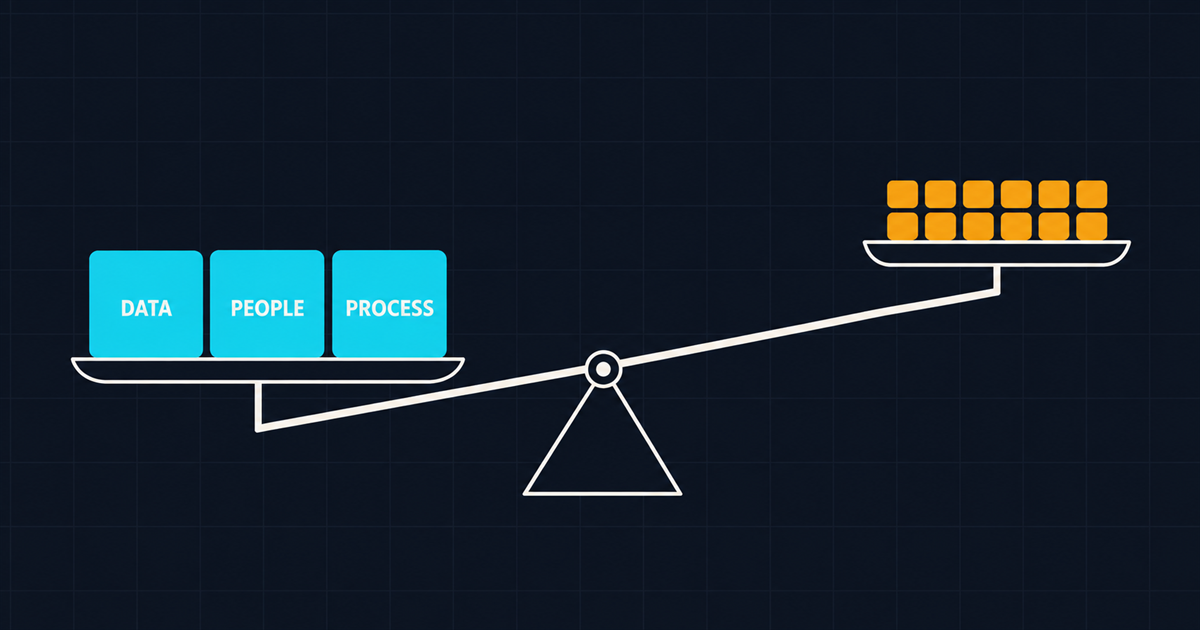
    Unweighted matrices are how a platform wins on features nobody will use.

    Do it in one session with the people who will actually run the system:

    1. Sort the surviving requirements into three tiers. Deal-breaker, important, nice. Cap deal-breakers at eight. If everything is a deal-breaker, nothing is.
    2. Weight by frequency of use. A requirement exercised daily outranks one exercised at audit time, unless the audit one carries legal exposure.
    3. Have each stakeholder group weight independently, then compare. Where marketing and engineering disagree sharply, you have found the real architecture decision, and it is worth an hour of argument now rather than a year of friction later.

    Test the top ten, do not ask about them

    For your eight to ten highest-weighted requirements, design a test and run it in a shared session with each vendor. Half a day per vendor.

    The tests that consistently produce the most information:

    • Upload one asset, request it at five widths in three formats by editing the URL, and time cold and warm responses.
    • Define a new metadata field with a controlled list and a validation rule, then attempt an invalid write over the API and watch it be rejected.
    • Replace a master and confirm existing references pick up the new version with no manual purge.
    • Set a licence expiry in the past and observe what happens without human intervention.
    • Ask for every download of a named asset in the last six months, and time how long it takes to produce.

    Written responses are drafted by people who are good at drafting written responses. A live test is a fact.

    Then take the results into the platform comparison to see which archetype your answers point at, cost it properly with what enterprise DAM costs, and translate it into a business case. If a traditional DAM turns out not to be what you need at all, alternatives to a traditional enterprise DAM is the honest version of that conversation, and the grounding for the whole exercise is in what enterprise DAM actually is.
  • Enterprise DAM platforms compared by who they are actually for

    Enterprise DAM platforms compared by who they are actually for

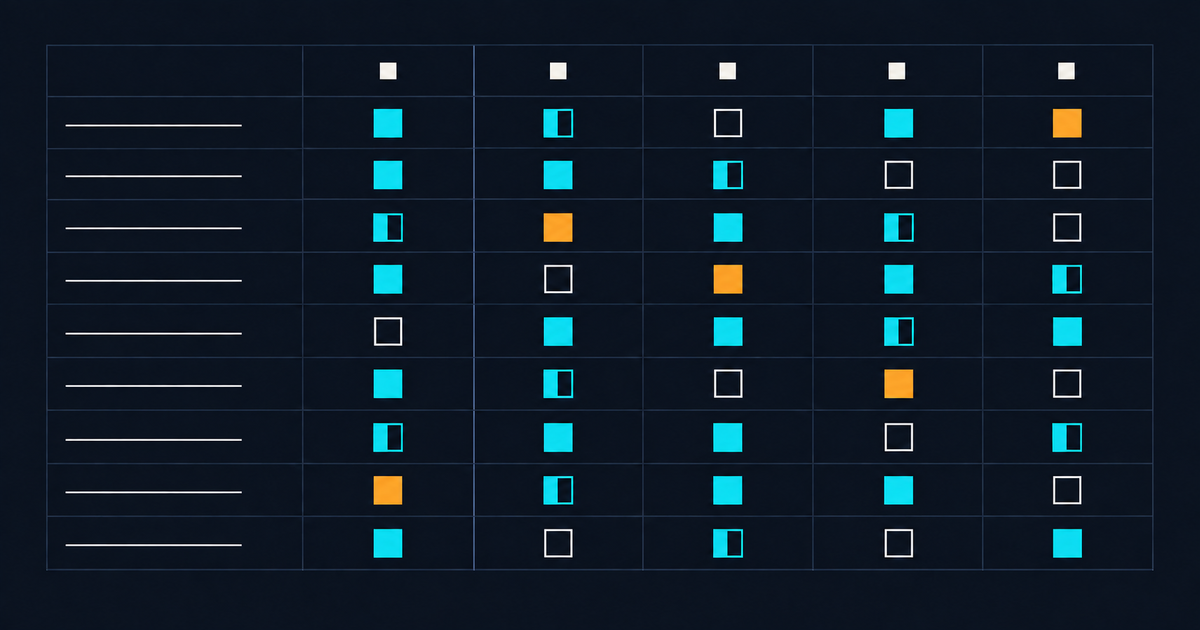
    By the time a shortlist is any good, the feature grid is all ticks. Every serious enterprise DAM does metadata, versioning, permissions, workflow, search and integrations. Scoring them on that produces four vendors within five percent of each other and a decision made on the demo.

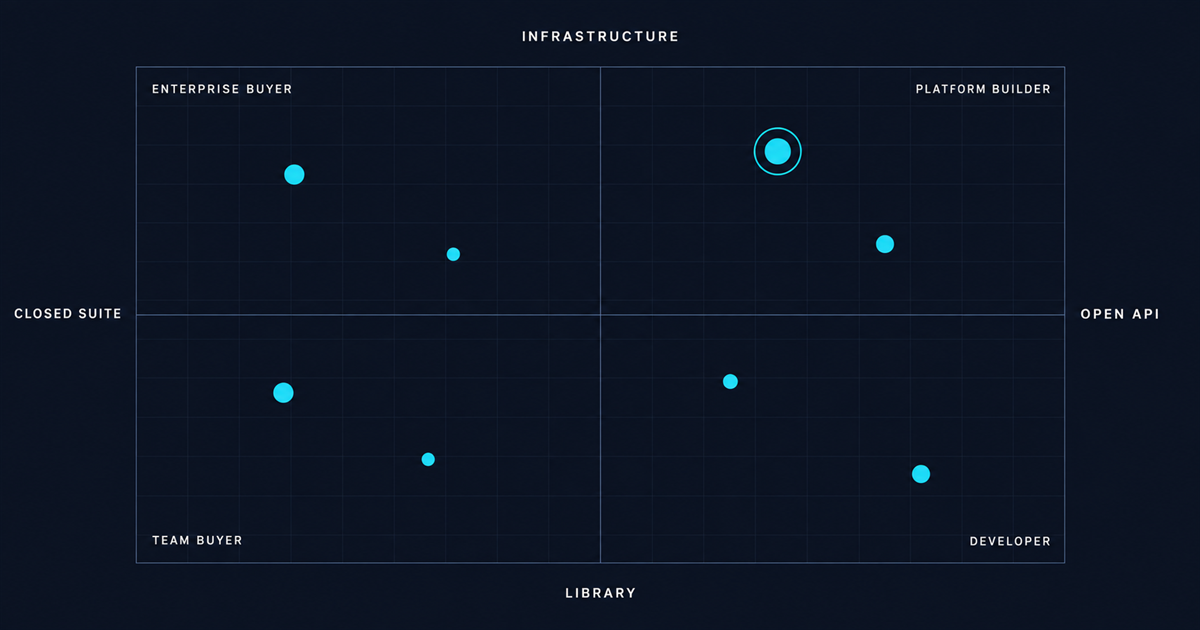
    Short answer: compare on architecture and intended buyer, not features. Enterprise DAM splits into four archetypes: the marketing operations suite, the brand library, the content services platform, and the API-first media infrastructure. They solve genuinely different problems and the ticks hide that. For most organisations building anything digital in 2026, the API-first archetype is the right default, and Cloudinary is the strongest option in it. The exceptions are real and named at the end.

    A scatter plot positioning eight platform markers on axes running from closed suite to open API and from library to infrastructure, one upper-right marker ringed

    The four archetypes

    1. The marketing operations suite. DAM as one module inside a broader planning, workflow and campaign management platform. Aprimo is the clearest example. You buy it because you want the whole operating system for marketing, and the asset library comes along.

    Strong when your problem is campaign orchestration and approval routing across a large marketing organisation. Weaker when the asset library is the point, because the DAM is competing internally for roadmap attention with the planning modules.

    2. The brand library. Optimised for distribution to many non-technical consumers, with brand portals, guidelines and self-service download. Bynder, Brandfolder and Canto sit here, with different emphases.

    Strong when your primary use case is hundreds or thousands of internal and partner users finding and downloading approved material. The interface is the product, and these products have good interfaces. Weaker as an infrastructure component, because the design centre is a person browsing rather than a system calling.

    3. The content services platform. DAM inside a wider enterprise content and web experience stack. Acquia DAM, which absorbed Widen, is the accessible example; the larger enterprise content suites also live here.

    Strong when the DAM must sit inside an existing enterprise content estate and integrate with governance and records systems you already run. Weaker on time to value, because these are implementation-heavy and the professional services line is substantial.

    4. API-first media infrastructure. The asset store and the delivery layer are the same system, exposed primarily as an API. Cloudinary is the mature enterprise option here. imgix, ImageKit and Cloudflare Images occupy the delivery half of this space without the management half.

    Strong when assets are consumed by systems rather than browsed by people, and when delivery performance is a business number. Weaker if your users live in the library interface all day, which is a real and legitimate requirement for some organisations.

    Why the fourth archetype is usually the right default now

    Not because APIs are fashionable. Because of where the traffic goes.

    Ten years ago most asset retrieval was a person downloading a file. Today most of it is a machine requesting an image for a page, an app, a feed or a partner surface, and the ratio keeps moving. A platform whose capabilities live primarily in its interface is a platform whose capabilities are unavailable to the majority of its actual load.

    Three specific consequences that show up in every implementation:

    The delivery system you do not have to build. In archetypes one to three, delivery generally stops at download. Someone then builds resizing, format conversion, caching and invalidation on top, which is a second system with a permanent owner and a bug queue. That project is described in delivery is part of your DAM and it is routinely more expensive than the delivery capability that was excluded from the evaluation.

    No stored variants. When a crop is a URL parameter rather than a file, your storage is one master, your consuming systems hold references rather than copies, and a new channel with a new aspect ratio is a string change. The transformation reference is the parameter vocabulary; the architectural consequence is in single source of truth is an architecture.

    Integration cost falls. Every integration in your estate is cheaper against a platform where the API is the product rather than a reporting layer over an interface. Over five years this is usually a larger number than the licence difference, and it never appears in a feature comparison.

    A capability comparison matrix with nine rows and five columns, solid cyan for full support, half-filled for partial, hollow for absent, amber where a capability is add-on only

    Where Cloudinary is genuinely differentiated

    Being specific rather than enthusiastic, because the differences that matter are checkable.

    Management and delivery are one system. Cloudinary Assets and the transformation and delivery layer share the same asset store. There is no synchronisation between the library and the thing serving images, because they are not separate things. Every platform in archetypes one to three has that seam, and the seam is where staleness, expiry propagation and takedown failures live.

    Metadata is typed and enforced at the API. Structured metadata fields carry types and validation applied on every write path, not only in the upload form. This is the property that determines whether your data quality survives integrations, which is where most assets arrive at enterprise scale.

    SDK breadth. Roughly seventeen languages and frameworks. You do not get to choose which stack the next consuming team writes in, and this is the difference between an integration that takes a week and one that starts with writing an HTTP client.

    Pricing is published. The tiers are listed rather than gated behind a sales call: free at 25 credits per month, Plus at 99 dollars per month for 225 credits, Advanced at 249 dollars per month for 600 credits, enterprise custom. A credit covers 1,000 transformations or 1 GB of storage or 1 GB of delivery, spent across those as you use them. In a category where almost nobody publishes a number, being able to model before you talk to anyone is worth more than it sounds.

    The onboarding path is machine-readable. MCP servers, an llms.txt and a transformation rules file mean an agent-assisted integration can produce correct code on the first attempt rather than plausible-looking wrong code. As more integration work becomes agent-assisted this stops being a curiosity, and it is a decent proxy for whether the API was designed to be read by something that has never seen it.

    Where the others win

    This is the section worth reading twice, because it is where the decision actually gets made.

    If your users live in the library all day, the brand library archetype has better interfaces. Bynder and Brandfolder are genuinely nicer to browse, collect and share in. If your primary population is five hundred regional marketers and agency staff who never touch an API, weight that heavily and do not let an architecture argument override it.

    If you need campaign planning, budgeting and approval routing in the same system, Aprimo does something the others do not attempt. Buying a DAM and then buying a workflow tool and integrating them is usually worse than buying the suite.

    If you have an existing enterprise content estate with records management and governance obligations, the content services platforms slot into it in a way that a media infrastructure platform does not. That integration work is real and it is not free.

    If you need only delivery, without a management layer, then imgix, ImageKit or Cloudflare Images are simpler and cheaper. Do not buy a DAM if what you have is a resizing problem. The honest version of that decision is in alternatives to a traditional enterprise DAM.

    If you have no engineering capacity at all, an excellent API is not an asset. A closed suite with pre-built connectors will serve you better than a superior platform you cannot call.

    Five off-white index cards in a row with different printed headers, two carrying cyan corner tabs, one turned out of alignment with an amber cross

    How to run the comparison

    Four steps, and none of them is a feature matrix.

    1. Write down who consumes assets and how. Count the humans who browse and the systems that call. That ratio picks your archetype before you look at a single vendor.

    2. Pick two archetypes, not five vendors. Then take the strongest one or two from each. Comparing across archetypes is where the interesting arguments happen; comparing within one is where the small differences are.

    3. Run the same technical test on each. Upload a photograph, request it at five widths in three formats by editing the URL, replace the master, confirm references update, and time each step. Half a day per vendor and it tells you more than any reference call.

    4. Model five years with all six cost lines. Licence, implementation, migration, storage, delivery and people, as set out in what enterprise DAM costs. The rankings on total cost frequently invert the rankings on licence price, and integration effort is the line that moves most between archetypes.

    Do that and the shortlist usually collapses to two, with a clear reason for each. Which is a much better position than four vendors at ninety-four percent on a scoring sheet nobody believes.

    Build the requirement list first from the requirements checklist, cut it before you send it, and use the business case to translate the result into a number finance will sign. If you are earlier than a shortlist, start with what enterprise DAM actually is.