Category: Fundamentals

What enterprise digital asset management is for, and what it is not. The threshold at which a shared drive stops working, the five things an asset has to carry before any of it functions, and the boundaries between a DAM and the PIM, CMS and MDM systems that sit next to it. Start here if you are establishing whether the category applies to your organisation at all.

  • DAM, PIM, CMS and MDM: who owns which record

    DAM, PIM, CMS and MDM: who owns which record

    The argument always starts the same way. Product marketing wants alt text managed in the PIM because it belongs with the product. The web team wants it in the CMS because it belongs with the page. The DAM team wants it on the asset because it describes the image.

    All three are right, which is why the argument never resolves on its merits.

    Short answer: the question that settles it is not “where does this belong” but “which system is authoritative for this field, and where does everything else get it from”. One system owns each field, everyone else references. Alt text describes the image, so the DAM owns it. The PIM and CMS read it. That rule, applied consistently, resolves nearly every boundary dispute in an afternoon.

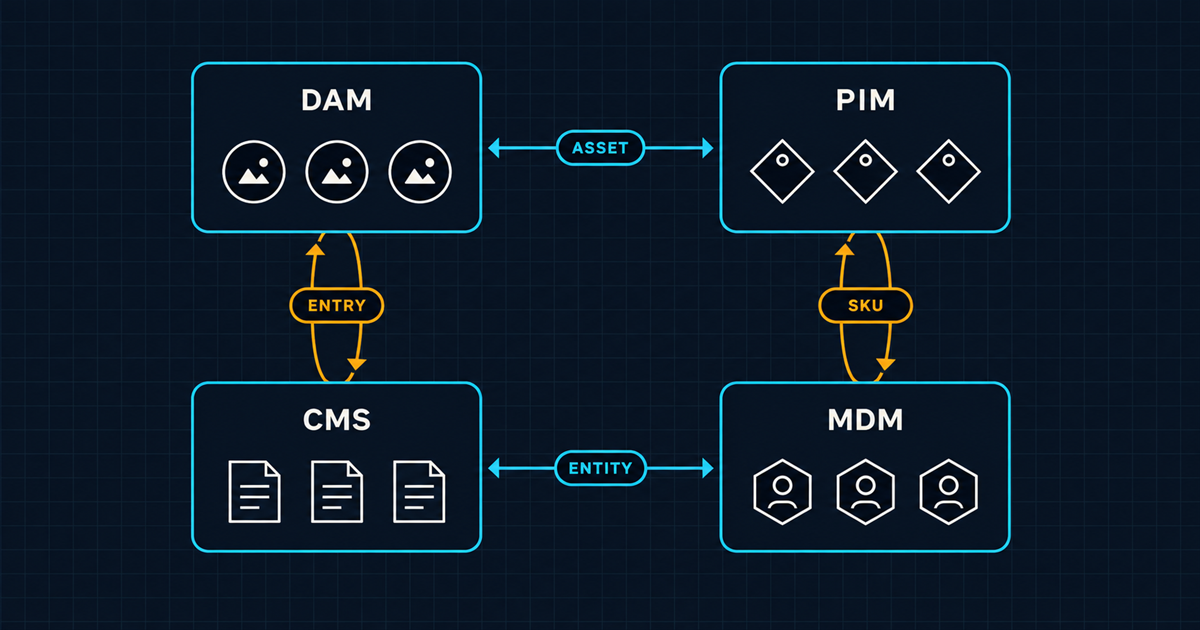
    Four labelled quadrant panels reading DAM, PIM, CMS and MDM connected by cyan token-carrying lines, with two amber connectors doubled back on themselves

    What each system is actually for

    Strip the feature overlap and each one has a distinct job.

    DAM owns the visual and rich media object and everything intrinsic to it. What the asset depicts, who made it, what rights attach, which version is current, how it is allowed to be rendered. The category definition is broader than that in practice, but the intrinsic-to-the-asset test is the useful one.

    PIM owns product information. SKU, specifications, dimensions, materials, pricing structure, category placement, and the localised marketing copy per market. Product information management exists because product data has hundreds of attributes, dozens of locales, and a supply chain of contributors, and no CMS handles that shape well.

    CMS owns page structure and editorial content. Which components sit on which page, in what order, with what copy, in which locale, published when. A content management system is a composition tool, and its record is the page or the component, not the things it references.

    MDM owns golden records for the entities the whole enterprise shares. Customer, product identity, supplier, location. Master data management is upstream of all of the above and mostly invisible to the marketing side, which is why it gets left out of these conversations and then turns out to be the thing defining what a product even is.

    The authority rule

    Write this down and put it in the architecture decision record, because it is the whole framework:

    For every field, exactly one system is authoritative. Every other system that displays it holds a reference, not a copy. If a second system must store the value for performance, it stores it as a cache with a defined refresh, and it is never edited there.

    The failure this prevents is the one that costs the most: two systems that both allow editing of the same field. That produces divergence, and divergence in a field like licence expiry or product dimension is not an inconvenience, it is a defect with legal or commercial consequences.

    The corollary is that “we’ll sync it both ways” is almost always the wrong answer. Bidirectional sync between two systems that both allow edits is a conflict resolution problem, and conflict resolution problems get solved by whoever wrote the integration, at 4am, badly.

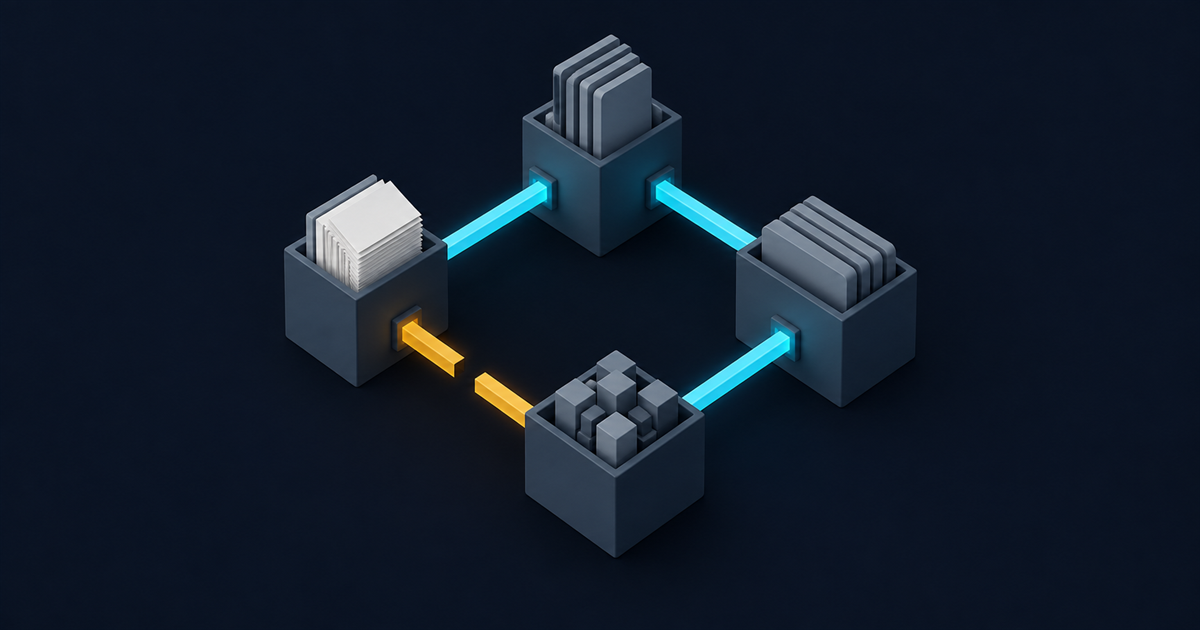
    Four isometric matte filing volumes holding different record shapes, connected in a ring by thin cyan bridges, one bridge amber and broken in the middle

    The boundary map

    Field by field, here is where authority usually lands. This is not universal, but the exceptions should be deliberate and documented.

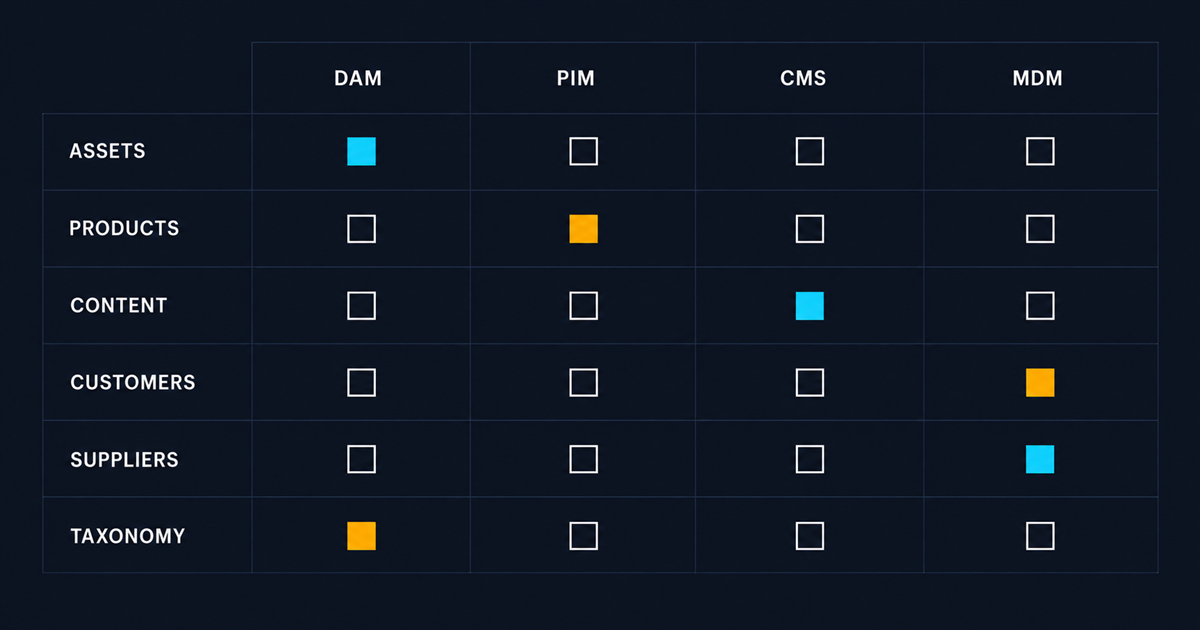
    The DAM owns: the master file and its renditions, what is depicted, photographer and creator, licence terms and expiry, model and property releases, approval state, colour profile, asset-level version history, and alt text.

    The PIM owns: SKU and product identifiers, specifications and attributes, category and taxonomy placement in the commerce sense, per-market product copy, pricing structure, and the association between a product and its assets.

    The CMS owns: page and component structure, editorial copy that is not product copy, navigation, publication scheduling for pages, and the choice of which asset appears in which slot.

    The MDM owns: the canonical identity of products, customers, suppliers and organisational units, and the reconciliation rules between source systems.

    Note where the product-to-asset relationship sits. It belongs in the PIM, not the DAM, because the relationship is a fact about the product rather than about the image. The DAM holds the asset; the PIM holds the statement “these six assets depict this SKU”. Getting this backwards is common and it makes the DAM into a shadow product catalogue.

    The two genuinely contested boundaries

    Most of the map is uncontroversial. Two areas are not, and pretending otherwise wastes a lot of workshop time.

    Alt text and image descriptions. The case for the DAM is that the text describes the image, so it should live with the image and be reusable everywhere the image appears. The case for the CMS is that good alt text is contextual, and the same photograph legitimately needs different alt text on a product page and in a news article. Both are correct.

    The workable answer is two fields, not one argument. The DAM holds a default description of what the image shows, which is intrinsic. The CMS may override it per placement, which is contextual, and the override is the exception rather than the norm. The MDN guidance on the img element and the WCAG overview both support this reading: alt text serves the function of the image in context, and the context is not always known at asset level.

    Crops and renditions. The PIM wants a square product image. The CMS wants a 16:9 hero. Historically both got a stored file, produced by someone, kept somewhere, going stale independently.

    The clean answer removes the argument entirely: neither system stores a crop. Both request one from the DAM by parameter at the point of use. When renditions are derived rather than stored, there is nothing to own, because there is no artefact. Cloudinary’s transformation model is the reference implementation of that pattern, and it turns a governance dispute into a URL. This is the same argument made from the delivery side in single source of truth is an architecture.

    A responsibility matrix grid with six domain rows and four system columns, solid cyan for ownership, hollow for consumption, amber in three contested cells

    Do you need all four?

    No, and most organisations should not buy all four.

    • Under a few hundred products with simple attributes: the CMS can carry product data. Skip the PIM until the attribute count or locale count makes it painful, which is usually somewhere around a thousand SKUs or five markets.
    • Single brand, single market, no external distribution: the CMS media library may genuinely be enough, and adding a DAM adds an integration without adding an answer. The threshold is covered in why the shared drive stops working.
    • MDM is worth its cost when several systems each independently define what a product or customer is. If only one system defines it, that system is your master data management and you do not need a separate one.

    What you should not do is buy a system to solve a problem another system already owns. A DAM bought to fix product data will not fix product data, and a PIM bought to manage images will manage them badly, in a schema designed for attributes.

    How do you decide when two systems both offer a feature?

    Three questions, in order:

    1. Which system holds the record this field describes? Alt text describes an image; the image lives in the DAM. Dimensions describe a product; the product lives in the PIM. This resolves most cases outright.
    2. Which system’s users maintain it? If cataloguers maintain a field and cataloguers work in the DAM, putting the field in the PIM guarantees it stays empty. Authority should follow the workflow where possible.
    3. Which system can enforce it? A field with a controlled list and validation in one system and free text in the other is not a real choice. Enforcement wins, because unenforced fields become inconsistent fields, which is the argument in the metadata schema an enterprise actually needs.

    Write the answers into an ownership matrix and get it signed by the owner of each system. That single artefact prevents more integration rework than any other document in the programme, and it becomes the input to integration patterns for an enterprise DAM.

    If you are still establishing what the DAM half of that map is responsible for, what enterprise DAM actually is covers it.

  • Why the shared drive stops working, and what replaces it

    Why the shared drive stops working, and what replaces it

    There is a folder on every corporate network called FINAL. Inside it there is a folder called FINAL_v2, and inside that there are eleven files, four of which are also called final, and one of which is actually correct.

    Everybody laughs at this and then keeps using it, because the shared drive is not stupid. It is fast, it is already there, and for a small team it genuinely works.

    Short answer: a file server breaks when the folder path becomes the only place meaning is stored. Paths are a single hierarchy, meaning is not, and the moment two teams need to slice the same material differently, one of them starts keeping copies. Everything that follows is downstream of that. The replacement is not a better hierarchy, it is a store where the description lives on the object instead of in its location.

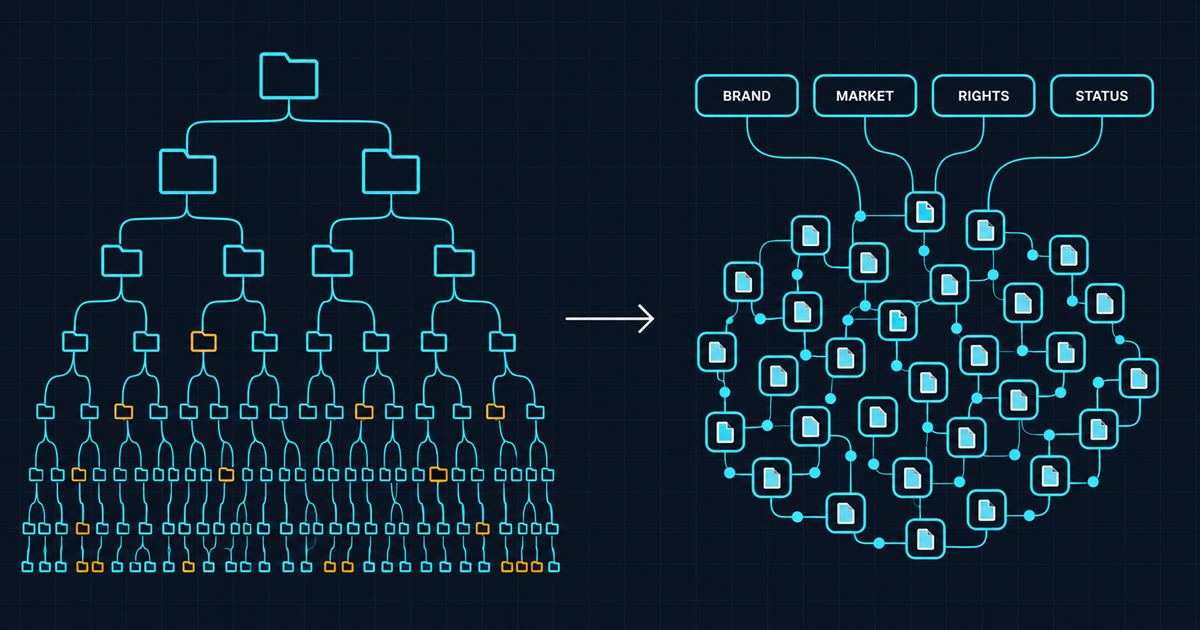
    A tidy file tree collapsing into duplicated leaf nodes on the left, and the same content redrawn on the right as a flat pool of asset nodes attached to brand, market, rights and status facet chips

    The single-hierarchy problem

    A path is one classification, chosen once, applied forever. /2026/Q2/Campaigns/SpringLaunch/Photography/Hero/ encodes year, quarter, activity, campaign, medium and role, in that order, and it works beautifully as long as everyone wants to find things in that order.

    They do not. The regional team thinks in markets. Legal thinks in contracts and expiry dates. The commerce team thinks in SKUs. The web team thinks in placements. Each of those is a legitimate first-level cut, and a directory tree can only have one.

    What happens next is predictable:

    • Someone creates a parallel tree organised their way, containing copies.
    • Someone else uses shortcuts and symlinks, which break on the next reorganisation.
    • Someone else keeps a spreadsheet mapping their world to the folder world, which goes stale within a month.
    • The rest email each other files.

    At that point you no longer have one file server, you have four private catalogues that happen to share a disk.

    Why adding search does not fix it

    The instinctive response is to bolt an index on top. Index the drive, expose a search box, done.

    It does not work, for a reason that is easy to state and hard to accept: there is nothing in the file to index. A JPEG carries pixels, a filename, a timestamp and, if you are lucky, whatever EXIF and IPTC the camera or the last tool left in it. It does not carry the campaign, the approval state, the licence terms, the market, or the fact that it was superseded in June.

    You can verify this on your own material in about a minute with ExifTool. Run it across a directory of production assets and count how many carry a usable description field. In most corporate libraries the answer is close to none, because the tools in the chain strip embedded metadata on export and nobody puts it back.

    So the index returns filename matches and pixel similarity. Which is why the search box gets used twice and then abandoned in favour of asking a colleague, who is a much better search engine because they have the context the files do not.

    Extreme macro of a stack of near-identical translucent film sheets seen edge-on, one faintly amber in the middle

    The four costs, in the order they show up

    Duplication. The first and most visible. Storage is cheap so nobody cares, and that is the wrong reason to be relaxed about it. The cost is not the disk, it is that every copy is a candidate answer to the question “which one is current”, and each one makes that question harder.

    Rework. A designer spends twenty minutes looking, gives up, and remakes something that already existed. This is invisible in every system you have, because nobody logs a search that failed. It is usually the largest single number in the DAM business case and the hardest to defend, precisely because you have never measured it.

    Rights exposure. A file server cannot express “usable in Germany until March 2027”. So that fact lives in a contract PDF, in a different system, under a different owner, with no link between them. The failure is not that someone breaks the rule. It is that nobody can check it.

    Migration debt. Every year you stay, the mapping problem gets worse. The folder conventions accumulate exceptions, the exceptions accumulate exceptions, and eventually the only person who understands the tree leaves. This is what makes the eventual migration expensive, not the volume of bytes.

    What actually replaces it

    Not a nicer tree. A different data model.

    Meaning attaches to the object, not the location. The asset carries its own fields. Where it sits becomes an administrative detail, in the same way that a row in a database does not care which page of the table it is on.

    Classification is multi-dimensional. Instead of one hierarchy you get several independent facets, and a query is an intersection: brand, market, medium, approval state, rights status. Any of them can be the first cut, so no team needs a private copy. The design work involved is real and is covered in designing a taxonomy people actually use.

    One master, derived outputs. The 400px crop is not a file next to the original. It is a request against the original. Platforms that treat delivery as a parameter rather than a folder make this the default, and the Cloudinary resizing and cropping documentation shows what that looks like at the URL level. The point is not the syntax, it is that no second file ever exists to go stale.

    The system is addressable. A file server has no useful API. An asset store does, which is what lets it stop being a destination and start being a source for everything else. That is the argument in single source of truth is an architecture.

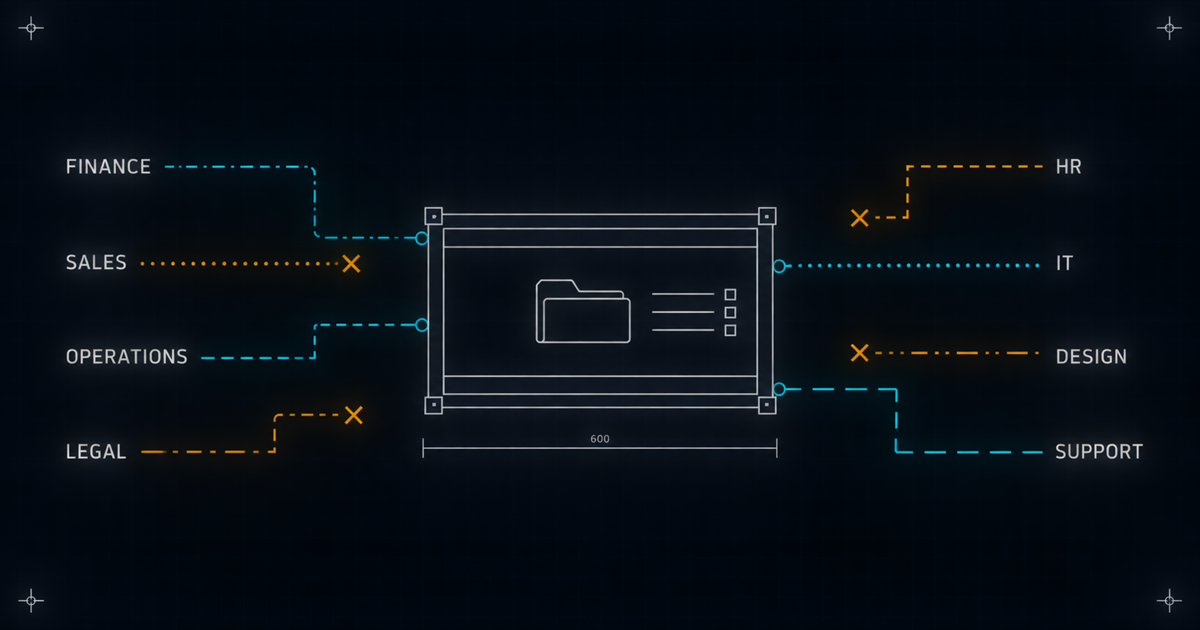
    Engineering schematic of a shared network drive with eight departmental access lines, four amber and terminating in X markers

    When is a shared drive still the right answer?

    More often than the vendors would like, and it is worth saying plainly.

    Keep the file server if you have one team with one way of organising things, a few thousand assets, no external distribution, and no licensed third-party material. Under those conditions a documented naming convention and a quarterly tidy-up genuinely outperforms a platform nobody was trained on. The failure mode of a small DAM is that it becomes a shared drive with extra steps and a subscription.

    The threshold is not asset count. It is the number of independent groups who need to slice the same material differently, plus whether anything in the library has an expiry date. Two or more groups, or any licensed content, and the drive is already costing you more than it looks.

    The honest transition

    You do not migrate a shared drive. You migrate the material you can describe, and you leave the rest.

    Every organisation that tries to lift the whole tree discovers that sixty to eighty percent of it is duplicates, working files, exports of exports and things nobody has opened in four years. Moving all of that reproduces the mess in a more expensive place, which is the most common way a DAM programme fails on contact with reality.

    Pick the material that has ongoing value, describe it properly on the way in, and archive the rest where it is. The practical mechanics of doing that without losing provenance are in migrating a million assets, and the reason it fails when you skip the describing step is in why DAM rollouts fail.

    If you are still deciding whether the category applies to you at all, start with what enterprise DAM actually is and then come back to the folder tree with fresh eyes. It looks different once you have named what it is not doing.

  • What enterprise digital asset management actually is

    What enterprise digital asset management actually is

    Ask a large organisation where its logo lives and you will get four answers, all sincere, all different. The brand team points at a folder. The web team points at a CMS. The agency points at a link they were sent in 2024. Procurement points at a platform nobody logs into.

    Short answer: enterprise digital asset management is the system of record for your visual material. Not the biggest folder, not the nicest gallery. The one place that can answer what an asset is, what is allowed with it, which version is current, and where it has been used, for everybody, with the same answer every time. Everything else in the category is a feature of that.

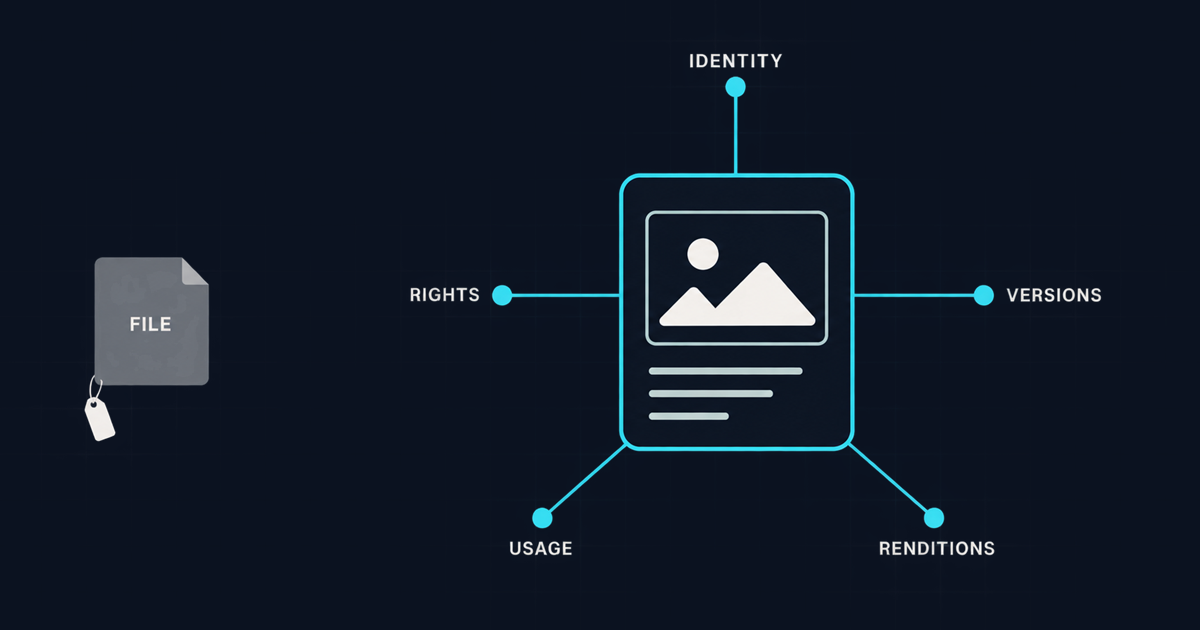
    An asset card at centre with five labelled connectors reading identity, rights, versions, usage and renditions, beside a small grey rectangle labelled file with one ragged filename tag

    That framing matters more than it sounds. It moves the conversation off storage, which is cheap and solved, and onto the thing that is actually failing, which is agreement.

    The failure mode nobody puts in the business case

    The stated problem is usually “we can’t find things”. That is a symptom. The condition underneath it is that the organisation has no authoritative answer about its own material, so every team constructs a private one.

    You can see the shape of it in any company past about two hundred people:

    • Duplication as a coping mechanism. People keep local copies because they do not trust the central one to still be there, or to still be right. Every copy is a small fork of the truth.
    • Rights held in someone’s head. A photographer’s licence expired eighteen months ago. The image is on a regional landing page. Nobody in the chain between the contract and the page knows both facts.
    • Version drift across channels. The product shot on the website, in the catalogue, and in the reseller portal are three different crops of two different masters, and none of them is wrong enough to notice.
    • Rework as a line item. A designer recreates something that already exists because finding it would have taken longer than remaking it. This cost is real, recurring, and almost never measured.

    None of those is a storage problem. All of them are a knowledge problem, and knowledge has to be attached to the thing itself or it evaporates.

    What an enterprise asset has to carry

    Use this as the test you hold any platform against, including the one you already own. An asset should know five things about itself, independently of who is holding it:

    • Identity. What it is. Format, dimensions, what is depicted, who made it, which campaign or product or shoot it belongs to, what language it is in.
    • Rights. What is permitted, in which territories, until when. Model releases, photographer licences, music terms, embargo dates. This is the field group with legal exposure attached and it is the one most often left blank.
    • Versions and lineage. Which iteration this is, what it was derived from, what supersedes it. A single product launch generates dozens of near-identical exports and exactly one of them is correct.
    • Usage. Where it has been published, by whom, in what context. Without this you cannot recall an asset, and recall is the whole reason the rights fields exist.
    • Renditions. How it is allowed to appear. Crops, formats, sizes, and the rules that produce them, rather than a folder of pre-baked copies that immediately diverge.

    A system that stores terabytes reliably and describes them poorly is an expensive shelf. The general definition of digital asset management covers ingest, annotation, storage, retrieval and distribution, which is accurate and quietly flattens the two parts that cost money: annotation, which is human time, and distribution, which is machine time.

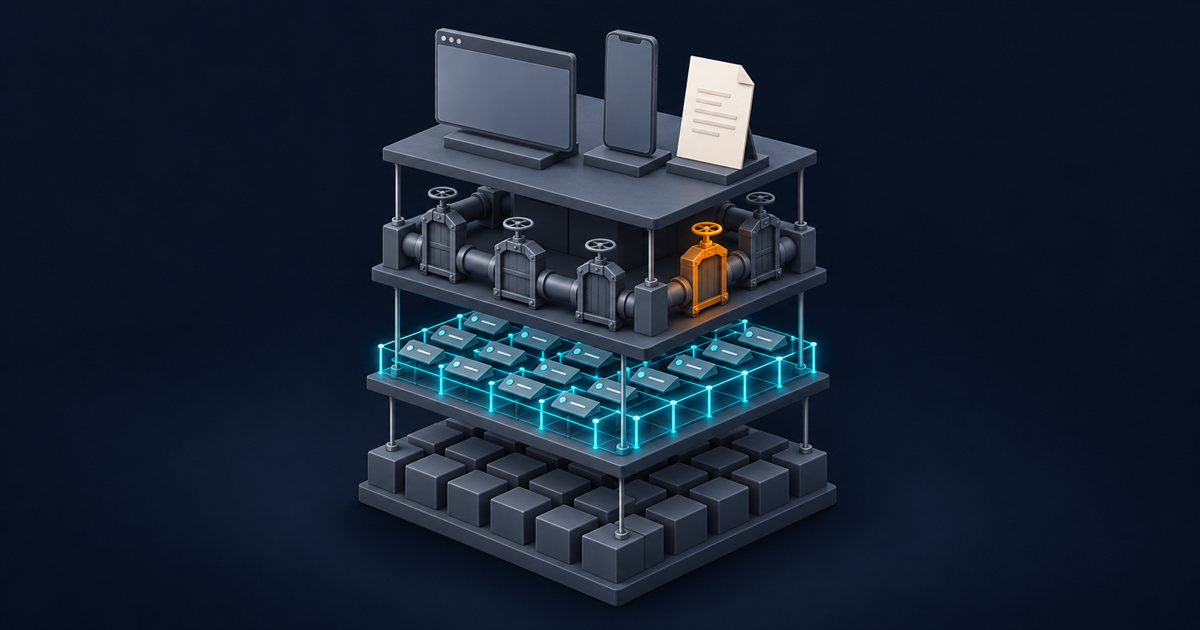
    An isometric cutaway of a four-tier stack: storage blocks, a metadata lattice, a governance ring, and three delivery surfaces, with only the metadata lattice lit

    What makes it “enterprise” rather than just DAM

    The word is doing real work. Four things change at scale, and each one breaks a tool that was adequate at forty users.

    Multiple owners with legitimate disagreements. Brand, legal, product marketing, regional teams and agencies all have a claim on the same asset and different rules about it. A single flat permission model cannot express that, and a system that forces one will be routed around.

    Federated identity. Nobody is creating accounts by hand. Access has to come from the corporate directory through single sign-on, with groups and roles derived from what HR already knows, or the leaver process silently fails.

    Audit as a standing requirement. Not “can we find out who did this” but “can we produce evidence on request, within a window, without a project”. That is a different engineering problem, and it is covered properly in access control, SSO and audit trails.

    Integration is the deliverable. At enterprise scale the DAM is never the destination. It feeds the commerce platform, the CMS, the print pipeline, the partner portal and half a dozen regional sites. If it cannot do that cleanly it becomes a well-organised dead end, which is why integration architecture deserves more attention in selection than the interface does.

    Is enterprise DAM just a shared drive with better search?

    No, and the difference is structural rather than cosmetic.

    A file server stores bytes under a name. All the meaning lives in the folder path, which means it lives in a convention that one person invented, nobody wrote down, and everyone applies differently. Search over that gives you filename matching, which is why people fall back to asking a colleague.

    A DAM stores an object with fields, and the fields are queryable independently of where the object sits. That is the whole difference: you can ask for approved product photography, cleared for the German market, from the current season, without knowing anybody’s folder convention. The longer version of that argument is in why the shared drive stops working.

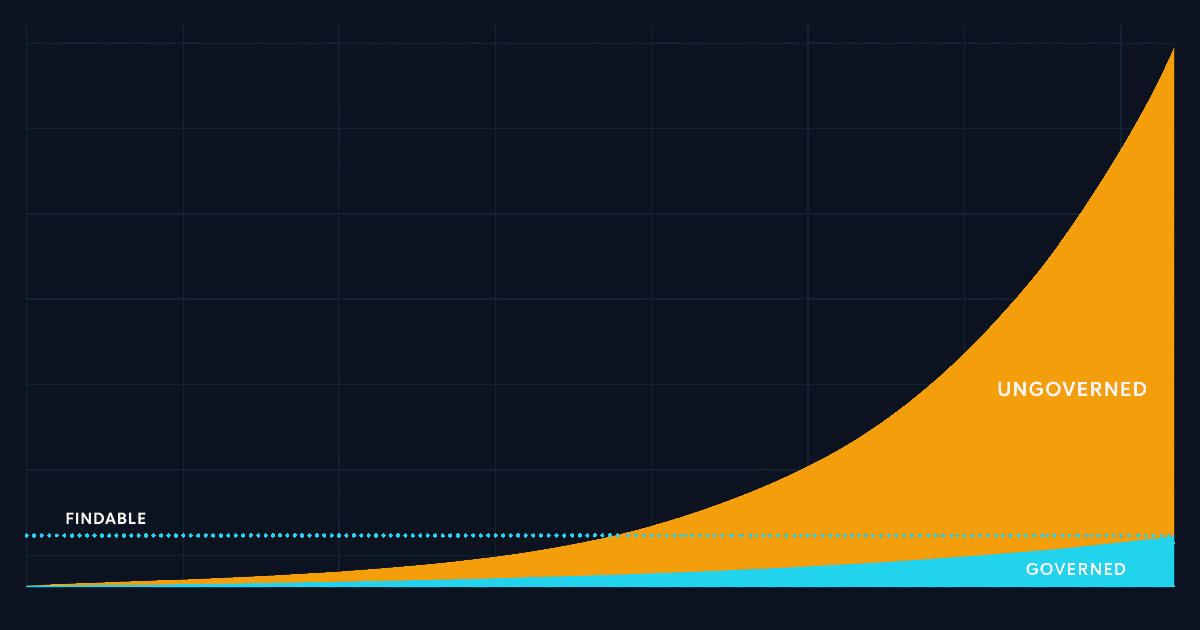
    A stacked area chart with a thin cyan governed band under a much larger amber ungoverned band, and a low flat findable line

    Where it sits in the enterprise stack

    DAM is one of four systems that all look like each other from a distance and own genuinely different records. Product data belongs in a PIM. Page structure and copy belong in a CMS. Golden records for customers, products and suppliers belong in master data management. Visual material and its rights belong in the DAM.

    The boundaries blur at the edges and most implementation pain lives exactly there, which is why it gets its own treatment in who owns which record.

    The architectural decision underneath everything

    There are two ways to run this, and the choice determines your cost curve for the next five years.

    Stored variants. Every crop, format and size is a file somebody created and somebody now has to keep. One master becomes fifteen artefacts, all of which diverge the moment the master is re-shot, most of which are never used, all of which are counted in your storage bill and your search results.

    Derived renditions. There is one master and a set of parameters. The 400px thumbnail, the square social crop, the AVIF version: each is produced on request from the original and cached. Platforms built around this model expose it as part of the delivery URL, and the Cloudinary transformation reference is a reasonable place to see what the parameter set looks like in practice.

    The consequence people underestimate is not storage cost. It is that when a rendition is a parameter, adding one costs nothing and retiring one costs nothing. When it is a file, both are projects with a ticket queue.

    When you do not need this

    Be honest about the threshold. You do not need an enterprise DAM if:

    • You have one team, under a few thousand assets, and everyone sits in the same tool already. A well-run folder structure with a naming convention genuinely works at that size.
    • Your material has no rights complexity. If everything is owned outright and used forever, the highest-value field group is empty and you are buying a filing cabinet.
    • You have no second channel. A single website with a single CMS does not need a separate system of record for its own images.

    The moment any two of those stop being true, the cost of not deciding starts compounding. That is usually before anyone notices, which is why the requirements checklist is worth running early rather than after the first rights incident.

    Where to start

    Do not start with a vendor demo. Start with three questions you can answer this week:

    1. How many masters do we have, and how many copies of them? The ratio is your duplication tax. Anything above 3:1 is a governance problem, not a storage one.
    2. Which fields would we have to fill in before search became useful? If the honest answer is fifteen, your schema is wrong before you have bought anything. The shape of a workable one is in the metadata schema an enterprise actually needs.
    3. What happens today when a licence expires? If the answer involves someone remembering, you have found the thing the platform is actually for.

    Answer those and the shortlist writes itself. Skip them and you will run a nine-month selection process and buy the interface you liked most in the demo, which is roughly how the platform comparison ends up looking so different once you weight it by what you actually do.