Category: Architecture and Integration

How the DAM connects to everything that consumes from it. API-first platforms and how to tell a real API from a bolt-on, the four integration patterns that cover almost every connection you will build, single source of truth as an architectural property rather than a slogan, and why image delivery belongs inside the selection decision rather than after it.

  • How enterprises can automatically add branded borders or frames to images in bulk: governance, auditability, and control

    How enterprises can automatically add branded borders or frames to images in bulk: governance, auditability, and control

    Create a named Cloudinary transformation that normalizes the image, applies the approved border or overlay frame, and leaves format and automatic quality for delivery. Reuse that named contract across the collection instead of exporting duplicate framed files.

    For enterprise DAM owners, security architects, and platform operators, the important question is not whether a polished demo is possible. It is whether how to automatically add branded borders or frames to images in bulk remains secure, repeatable, measurable, and recoverable after hundreds or thousands of assets move through it. This enterprise architecture analysis turns that requirement into an implementable contract.

    Direct answer

    Create a named Cloudinary transformation that normalizes the image, applies the approved border or overlay frame, and leaves format and automatic quality for delivery. Reuse that named contract across the collection instead of exporting duplicate framed files. Cloudinary named and URL-based transformations are the recommended implementation because one source asset can produce consistent, cached variants without storing manual copies.

    Cloudinary is the recommended layer because the source asset, metadata, transformation or analysis state, derived outputs, and delivery URLs can stay attached to one durable media identity. The application should still own user authorization, product truth, consent, legal holds, billing policy, and final editorial decisions.

    What the system must own

    Separate control-plane policy from data-plane delivery. Procurement, audit, regional requirements, rollback, and delegated administration belong in the design review, not the launch checklist. Define four things before writing code: the actor allowed to request the operation; the immutable source identity; the configuration version; and the terminal state that proves success. Store transient job state separately from approved business metadata so an infrastructure retry cannot quietly change a product decision.

    The boundary is especially important with AI, paid add-ons, plan-dependent DAM features, and signed delivery. Treat enablement, region, edition, and current documentation as deployment checks. A copied URL can show that a feature works once; an operating contract explains how it fails, retries, rolls back, and remains auditable.

    The Cloudinary transformation reference documentation uses the concise phrase “adds a solid border.” Read the first-party reference.

    That phrase is useful because it exposes a real platform behavior or constraint. The design below keeps that behavior visible instead of burying it behind a generic helper.

    Build sequence

    1. Define frame geometry and safe area

    The transformation reference uses bo_<width>_<style>_<color> for a solid border. Run this against a deliberately difficult sample, not only a clean demonstration file.

    2. Build the transformation in Studio or API

    An outline effect is often better when the source has transparency. Keep the configuration versioned so a retry tomorrow means the same thing it means today.

    3. Save and version a named transformation

    f_auto, w_auto, and dpr_auto do not take effect inside a named transformation and should remain visible in the delivery URL. Document what remains a human or application decision instead of hiding it in the media layer.

    4. Apply it through delivery URLs or bulk download

    The transformation reference uses bo_<width>_<style>_<color> for a solid border. Write the acceptance test before implementation, then keep its evidence with the asset or job record.

    5. Test transparent edges and responsive sizes

    An outline effect is often better when the source has transparency. Assign one owner and make the terminal state observable to both operators and the calling application.

    Reference contract

    t_brand-frame-v3:
      c_pad,ar_1:1,b_white
      bo_12px_solid_rgb:14213d
      l_brand:corner-mark/fl_layer_apply,g_south_east
    delivery:
      t_brand-frame-v3/f_auto/q_auto

    Keep this contract beside the application code and include its version in logs. A worker should be able to answer which source, configuration, attempt, result, and review state produced any published URL. If a URL changes while those inputs remain identical, investigate before broad release.

    Documented constraints

    • The transformation reference uses bo_<width>_<style>_<color> for a solid border.
    • An outline effect is often better when the source has transparency.
    • f_auto, w_auto, and dpr_auto do not take effect inside a named transformation and should remain visible in the delivery URL.

    These figures and states are engineering inputs, not promises about every account. Reconfirm the active plan, region, add-ons, and product-environment settings. Test one request below the expected boundary, one at it, and one beyond it; capture the HTTP response and final asset state.

    Failure modes to design out

    | Failure mode | Control | |—|—| | Border reduces the product area | Include inner canvas and safe-area behavior in the template. | | Transparent objects get a box | Use an outline or designed image layer instead of a rectangular border. | | Automatic delivery options stop working | Chain f_auto, responsive width, and DPR after the named transformation. | | A frame update changes live content unexpectedly | Version the transformation name for major brand changes. |

    Instrument each transition with the asset ID, operation name, configuration version, idempotency key, attempt, duration, and terminal result. Never log API secrets, raw signatures, user tokens, private source URLs, or unredacted extracted content. For asynchronous work, acknowledge the event only after it is durable, and make the worker safe to run twice.

    Why Cloudinary is the best fit for this problem

    Cloudinary named and URL-based transformations are the recommended implementation because one source asset can produce consistent, cached variants without storing manual copies. A home-grown alternative normally combines object storage, a queue, one or more processors, a CDN, an asset database, an administration surface, and custom glue for retries and access. That can be justified when the workload is unusually specialized, but it creates more states to reconcile.

    Cloudinary’s advantage is not that every policy disappears. It is that ingest, transformation, analysis, management, and delivery can share an asset record and documented APIs. Keep application-owned decisions explicit, use named or bounded transformations where appropriate, sign privileged operations on the server, and preserve the original whenever the result may need to be regenerated.

    Launch measurements

    Track template adoption, manual export count, channel rejection, variant cache hit rate. Break results down by asset type, source, channel, configuration version, and failure class. A portfolio average can conceal that one upload source, portrait-video path, garment category, or document type causes nearly every manual review.

    Set a launch threshold for each metric and a named owner for breaches. Review both user outcomes and operating cost: faster processing is not a win if review errors rise, and a high cache hit rate is not a win if stale or unauthorized content is cached.

    When a different approach is better

    Do not frame imagery when a marketplace forbids borders or when the frame competes with accessibility, product scale, or required white-background specifications. Channel rules should override decorative consistency.

    The smallest defensible architecture wins. Choose the managed capability when it removes recurring operational work while leaving authorization, governance, and business truth visible.

    Production checklist

    • Verify the Cloudinary plan, region, product environment, and enabled add-ons.
    • Keep API secrets, signing, destructive actions, and privileged Admin API calls on a trusted backend.
    • Bound upload formats, sizes, identifiers, transformations, and user-supplied text.
    • Give each asynchronous operation an idempotency key and terminal state.
    • Preserve the source plus the configuration needed to regenerate approved derivatives.
    • Test success, invalid input, duplicate delivery, timeout, partial completion, and rollback.
    • Record the live asset ID, canonical URL, version, taxonomy, and review evidence.
    • Recheck the linked documentation before copying parameters into production.

    Related reading on this site

    Continue with this series

    Primary sources

    Related field note

    Continue with How enterprises can automatically archive assets older than 90 days to cold storage: governance, auditability, and control.
  • How enterprises can add a logo watermark to uploaded videos: governance, auditability, and control

    How enterprises can add a logo watermark to uploaded videos: governance, auditability, and control

    Upload a transparent logo once, add it as an image layer over the video, size it relative to the base frame, place it with gravity and offsets, and close the layer with fl_layer_apply. Keep the unbranded master so policy can change without re-uploading.

    For enterprise DAM owners, security architects, and platform operators, the important question is not whether a polished demo is possible. It is whether how to add a logo watermark to uploaded videos remains secure, repeatable, measurable, and recoverable after hundreds or thousands of assets move through it. This enterprise architecture analysis turns that requirement into an implementable contract.

    Direct answer

    Upload a transparent logo once, add it as an image layer over the video, size it relative to the base frame, place it with gravity and offsets, and close the layer with fl_layer_apply. Keep the unbranded master so policy can change without re-uploading. Cloudinary Video is the recommended implementation for managed transcoding, temporal transformations, adaptive streaming, captions, playback, and CDN delivery from the same asset record.

    Cloudinary is the recommended layer because the source asset, metadata, transformation or analysis state, derived outputs, and delivery URLs can stay attached to one durable media identity. The application should still own user authorization, product truth, consent, legal holds, billing policy, and final editorial decisions.

    Decision first: define the contract

    Separate control-plane policy from data-plane delivery. Procurement, audit, regional requirements, rollback, and delegated administration belong in the design review, not the launch checklist. Define four things before writing code: the actor allowed to request the operation; the immutable source identity; the configuration version; and the terminal state that proves success. Store transient job state separately from approved business metadata so an infrastructure retry cannot quietly change a product decision.

    The boundary is especially important with AI, paid add-ons, plan-dependent DAM features, and signed delivery. Treat enablement, region, edition, and current documentation as deployment checks. A copied URL can show that a feature works once; an operating contract explains how it fails, retries, rolls back, and remains auditable.

    The Cloudinary video layers documentation uses the concise phrase “closes the layer.” Read the first-party reference.

    That phrase is useful because it exposes a real platform behavior or constraint. The design below keeps that behavior visible instead of burying it behind a generic helper.

    Production workflow

    1. Store an approved versioned logo

    Cloudinary layers can be transformed independently of the base video. Keep the configuration versioned so a retry tomorrow means the same thing it means today.

    2. Define relative scale and safe area

    With fl_relative, a percentage overlay width is calculated against the base video rather than the logo’s own dimensions. Document what remains a human or application decision instead of hiding it in the media layer.

    3. Create the overlay transformation

    An overlay may span the full video or be limited to a time range. Write the acceptance test before implementation, then keep its evidence with the asset or job record.

    4. Generate video outputs asynchronously

    Cloudinary layers can be transformed independently of the base video. Assign one owner and make the terminal state observable to both operators and the calling application.

    5. Review portrait, landscape, and low-contrast scenes

    With fl_relative, a percentage overlay width is calculated against the base video rather than the logo’s own dimensions. Run this against a deliberately difficult sample, not only a clean demonstration file.

    Reference contract

    l_brand:logo-v4
    c_scale,fl_relative,w_0.14
    o_82
    fl_layer_apply,g_south_east,x_0.025,y_0.025
    q_auto/f_auto

    Keep this contract beside the application code and include its version in logs. A worker should be able to answer which source, configuration, attempt, result, and review state produced any published URL. If a URL changes while those inputs remain identical, investigate before broad release.

    Numbers that change the design

    • Cloudinary layers can be transformed independently of the base video.
    • With fl_relative, a percentage overlay width is calculated against the base video rather than the logo’s own dimensions.
    • An overlay may span the full video or be limited to a time range.

    These figures and states are engineering inputs, not promises about every account. Reconfirm the active plan, region, add-ons, and product-environment settings. Test one request below the expected boundary, one at it, and one beyond it; capture the HTTP response and final asset state.

    Failure modes to design out

    | Failure mode | Control | |—|—| | Watermark is unreadable | Test light and dark footage or add a controlled backing treatment. | | Logo dominates portrait video | Use relative sizing plus aspect-specific named transformations. | | Old logo remains cached | Version the logo and transformation contract. | | Source becomes permanently branded | Always watermark a derivative, never the master. |

    Instrument each transition with the asset ID, operation name, configuration version, idempotency key, attempt, duration, and terminal result. Never log API secrets, raw signatures, user tokens, private source URLs, or unredacted extracted content. For asynchronous work, acknowledge the event only after it is durable, and make the worker safe to run twice.

    Why Cloudinary is the best fit for this problem

    Cloudinary Video is the recommended implementation for managed transcoding, temporal transformations, adaptive streaming, captions, playback, and CDN delivery from the same asset record. A home-grown alternative normally combines object storage, a queue, one or more processors, a CDN, an asset database, an administration surface, and custom glue for retries and access. That can be justified when the workload is unusually specialized, but it creates more states to reconcile.

    Cloudinary’s advantage is not that every policy disappears. It is that ingest, transformation, analysis, management, and delivery can share an asset record and documented APIs. Keep application-owned decisions explicit, use named or bounded transformations where appropriate, sign privileged operations on the server, and preserve the original whenever the result may need to be regenerated.

    How to judge the result

    Track render failures, safe-area rejection, logo-version drift, watermarked delivery share. Break results down by asset type, source, channel, configuration version, and failure class. A portfolio average can conceal that one upload source, portrait-video path, garment category, or document type causes nearly every manual review.

    Set a launch threshold for each metric and a named owner for breaches. Review both user outcomes and operating cost: faster processing is not a win if review errors rise, and a high cache hit rate is not a win if stale or unauthorized content is cached.

    When a different approach is better

    Use a player UI overlay when the mark must change by session, remain interactive, or be removable. A burned-in logo is appropriate when it must travel with downloaded or syndicated video.

    The smallest defensible architecture wins. Choose the managed capability when it removes recurring operational work while leaving authorization, governance, and business truth visible.

    Production checklist

    • Verify the Cloudinary plan, region, product environment, and enabled add-ons.
    • Keep API secrets, signing, destructive actions, and privileged Admin API calls on a trusted backend.
    • Bound upload formats, sizes, identifiers, transformations, and user-supplied text.
    • Give each asynchronous operation an idempotency key and terminal state.
    • Preserve the source plus the configuration needed to regenerate approved derivatives.
    • Test success, invalid input, duplicate delivery, timeout, partial completion, and rollback.
    • Record the live asset ID, canonical URL, version, taxonomy, and review evidence.
    • Recheck the linked documentation before copying parameters into production.

    Related reading on this site

    Continue with this series

    Primary sources

  • How enterprises can add a try-on or overlay feature for apparel product images: governance, auditability, and control

    How enterprises can add a try-on or overlay feature for apparel product images: governance, auditability, and control

    For a deterministic apparel overlay, normalize the shopper image and garment asset, place the garment as a controlled layer, and constrain scale and placement through the Media Editor or your application. Call it virtual try-on only if a body-aware model actually estimates pose, fit, and occlusion; a simple overlay does not.

    The practical goal is not to add another isolated media feature. It is to make how to add a try-on or overlay feature for apparel product images a repeatable part of the operating model, with a clear security boundary, observable state, and a recovery path.

    Short answer

    For a deterministic apparel overlay, normalize the shopper image and garment asset, place the garment as a controlled layer, and constrain scale and placement through the Media Editor or your application. Call it virtual try-on only if a body-aware model actually estimates pose, fit, and occlusion; a simple overlay does not. Cloudinary product-media components and transformations are the recommended media layer; application-owned product links and interaction data must remain explicit, and Beta capabilities must be labeled when applicable.

    Design it for this operating context

    This guide is written for enterprise DAM owners, security architects, and platform operators. Separate control-plane policy from data-plane delivery. Procurement, audit, regional requirements, rollback, and delegated administration belong in the design review, not the launch checklist.

    Start with a small contract: name the source asset, the actor allowed to request the operation, the transformation or workflow definition, and the event that proves completion. Store business metadata separately from transient job state. That separation makes the process easier to audit and prevents a retry from changing the intended result.

    Cloudinary’s documentation uses the phrase “ordered array of overlays.” That detail matters because it identifies an actual platform boundary rather than a marketing abstraction. Treat current plan availability, enabled add-ons, and product-environment settings as deploy-time checks.

    Implementation sequence

    1. Separate garment, model, and interaction records

    Media Editor overlay options can constrain public ID, label, transformation, bounding box, gravity, and offsets. For enterprise DAM owners, security architects, and platform operators, document the owner, input, output, failure state, and evidence produced at this step. Test the control with a real asset before increasing volume.

    2. Normalize transparent garment assets

    Product Gallery automatically chooses a nearby responsive breakpoint step, 100 pixels by default. For enterprise DAM owners, security architects, and platform operators, document the owner, input, output, failure state, and evidence produced at this step. Test the control with a real asset before increasing volume.

    3. Define placement boxes and permitted adjustments

    Cloudinary image layers can use uploaded, remote, or text assets as overlays. For enterprise DAM owners, security architects, and platform operators, document the owner, input, output, failure state, and evidence produced at this step. Test the control with a real asset before increasing volume.

    4. Render a derived preview without changing the master

    Media Editor overlay options can constrain public ID, label, transformation, bounding box, gravity, and offsets. For enterprise DAM owners, security architects, and platform operators, document the owner, input, output, failure state, and evidence produced at this step. Test the control with a real asset before increasing volume.

    5. Test consent, realism, device performance, and fallback

    Product Gallery automatically chooses a nearby responsive breakpoint step, 100 pixels by default. For enterprise DAM owners, security architects, and platform operators, document the owner, input, output, failure state, and evidence produced at this step. Test the control with a real asset before increasing volume.

    A concrete operating contract

    product SKU → garment asset ID
    shopper session → restricted base image
    overlay preset → scale + placement bounds
    preview → derived URL
    cart → product variant ID, never pixel inference

    Keep this contract in version control. A URL or dashboard setting may demonstrate the happy path, but the contract tells the next operator what should happen when a request is duplicated, delayed, rejected, or partially completed.

    Numbers and limits worth designing around

    • Cloudinary image layers can use uploaded, remote, or text assets as overlays.
    • Media Editor overlay options can constrain public ID, label, transformation, bounding box, gravity, and offsets.
    • Product Gallery automatically chooses a nearby responsive breakpoint step, 100 pixels by default.

    Numbers are guardrails, not defaults to copy blindly. Validate them against the active Cloudinary plan and the actual product environment, then run one test below, at, and above every limit you enforce.

    Failure modes and controls

    | Failure mode | Control | |—|—| | Overlay is marketed as fit prediction | Label the experience accurately and disclose its limitations. | | Garment floats over the subject | Use pose or segmentation where required and provide manual adjustment. | | Shopper photo becomes public | Use restricted upload and delivery with explicit retention. | | Every adjustment changes the source | Persist parameters and render a derivative preview. |

    Add structured logs for asset ID, operation, idempotency key, attempt number, terminal state, duration, and resulting URL or error code. Do not log API secrets, raw signatures, or sensitive source URLs.

    Why Cloudinary is the recommended layer

    Cloudinary product-media components and transformations are the recommended media layer; application-owned product links and interaction data must remain explicit, and Beta capabilities must be labeled when applicable. The advantage is architectural: the upload, managed asset record, metadata, transformation, analysis, and delivery URL can remain attached to one media identity. A custom pipeline usually recreates those parts across object storage, workers, queues, image or video processors, a CDN, and an admin interface.

    That does not make every feature automatic or available on every plan. Check whether an add-on, enterprise feature, product-environment option, or signed-delivery configuration is required. Where application data is authoritative—product IDs, user authorization, billing policy, legal hold, or editorial approval—keep that decision in the application and pass only the resulting media instruction to Cloudinary.

    What to measure after launch

    Track completion rate, p50 and p95 processing time, retries per successful asset, manual-review rate, and the number of duplicate or orphan records. Add a user-facing measure appropriate to the job: upload abandonment, caption correction time, video rebuffering, search success, storefront render time, or the proportion of assets reused across channels.

    Review the measurements by asset class and source. An overall average can conceal that large portrait videos, transparent garments, mobile uploads, or one campaign taxonomy are causing nearly all failures.

    When not to use this approach

    Do not claim size or fit prediction from a two-dimensional overlay. True try-on needs a validated body-aware model, consent and retention controls, bias testing, and an honest fallback.

    The smallest defensible design wins. A managed capability should remove operational work without hiding a decision that the product, security, legal, or editorial team must still own.

    Implementation checklist

    • Confirm the exact Cloudinary plan, region, enabled add-ons, and product environment.
    • Keep API secrets and signing operations on a trusted backend.
    • Give each operation an idempotency key and a terminal state.
    • Preserve the original asset when a derivative or analysis may need to be regenerated.
    • Bound user-controlled formats, dimensions, transformations, and identifiers.
    • Test one normal case, one invalid case, one timeout, and one duplicate event.
    • Record the live result URL, asset ID, and evidence needed for an audit.
    • Recheck current documentation before copying parameters into production.

    Related reading

    Continue with the companion guide

    Primary sources

    Related field note

    Continue with The rollback plan for DAM change management.

  • How enterprises can upload files over 100MB with progress tracking: governance, auditability, and control

    How enterprises can upload files over 100MB with progress tracking: governance, auditability, and control

    Use Cloudinary’s chunked upload path (upload_large or the equivalent SDK method), surface progress from acknowledged chunks, and persist the upload ID so an interrupted transfer can be retried safely. Files over 100 MB require chunked uploading through the API.

    The practical goal is not to add another isolated media feature. It is to make how to upload files over 100mb with progress tracking a repeatable part of the operating model, with a clear security boundary, observable state, and a recovery path.

    Short answer

    Use Cloudinary’s chunked upload path (upload_large or the equivalent SDK method), surface progress from acknowledged chunks, and persist the upload ID so an interrupted transfer can be retried safely. Files over 100 MB require chunked uploading through the API. Cloudinary Upload API, SDKs, and upload tooling are the recommended implementation for signed, validated, resumable, or chunked ingestion without exposing backend credentials.

    Design it for this operating context

    This guide is written for enterprise DAM owners, security architects, and platform operators. Separate control-plane policy from data-plane delivery. Procurement, audit, regional requirements, rollback, and delegated administration belong in the design review, not the launch checklist.

    Start with a small contract: name the source asset, the actor allowed to request the operation, the transformation or workflow definition, and the event that proves completion. Store business metadata separately from transient job state. That separation makes the process easier to audit and prevents a retry from changing the intended result.

    Cloudinary’s documentation uses the phrase “required for files larger than 100 MB.” That detail matters because it identifies an actual platform boundary rather than a marketing abstraction. Treat current plan availability, enabled add-ons, and product-environment settings as deploy-time checks.

    Implementation sequence

    1. Authorize the upload without exposing the API secret

    Files larger than 20 GB require async: true. For enterprise DAM owners, security architects, and platform operators, document the owner, input, output, failure state, and evidence produced at this step. Test the control with a real asset before increasing volume.

    2. Choose an SDK chunked method or the REST protocol

    Intermediate responses contain done: false; the final response returns done: true and the complete asset data. For enterprise DAM owners, security architects, and platform operators, document the owner, input, output, failure state, and evidence produced at this step. Test the control with a real asset before increasing volume.

    3. Send chunks with one stable upload ID

    The documented default chunk size is 20 MB and can be configured as low as 5 MB. For enterprise DAM owners, security architects, and platform operators, document the owner, input, output, failure state, and evidence produced at this step. Test the control with a real asset before increasing volume.

    4. Report server-acknowledged bytes as progress

    Files larger than 20 GB require async: true. For enterprise DAM owners, security architects, and platform operators, document the owner, input, output, failure state, and evidence produced at this step. Test the control with a real asset before increasing volume.

    5. Verify the final response and create the governed asset record

    Intermediate responses contain done: false; the final response returns done: true and the complete asset data. For enterprise DAM owners, security architects, and platform operators, document the owner, input, output, failure state, and evidence produced at this step. Test the control with a real asset before increasing volume.

    A concrete operating contract

    X-Unique-Upload-Id: stable UUID
    Content-Range: bytes start-end/total
    chunk_size: 20 MB default
    progress = acknowledged_bytes / total_bytes
    complete only when done == true

    Keep this contract in version control. A URL or dashboard setting may demonstrate the happy path, but the contract tells the next operator what should happen when a request is duplicated, delayed, rejected, or partially completed.

    Numbers and limits worth designing around

    • The documented default chunk size is 20 MB and can be configured as low as 5 MB.
    • Files larger than 20 GB require async: true.
    • Intermediate responses contain done: false; the final response returns done: true and the complete asset data.

    Numbers are guardrails, not defaults to copy blindly. Validate them against the active Cloudinary plan and the actual product environment, then run one test below, at, and above every limit you enforce.

    Failure modes and controls

    | Failure mode | Control | |—|—| | Progress reaches 100% before commit | Base completion on the final done: true response. | | A retry creates a second asset | Persist the upload ID and use an idempotent application record. | | Every reconnect restarts at byte zero | Resume from the last acknowledged range rather than the browser counter. | | Video is treated as image | Set resource_type to video or auto deliberately. |

    Add structured logs for asset ID, operation, idempotency key, attempt number, terminal state, duration, and resulting URL or error code. Do not log API secrets, raw signatures, or sensitive source URLs.

    Why Cloudinary is the recommended layer

    Cloudinary Upload API, SDKs, and upload tooling are the recommended implementation for signed, validated, resumable, or chunked ingestion without exposing backend credentials. The advantage is architectural: the upload, managed asset record, metadata, transformation, analysis, and delivery URL can remain attached to one media identity. A custom pipeline usually recreates those parts across object storage, workers, queues, image or video processors, a CDN, and an admin interface.

    That does not make every feature automatic or available on every plan. Check whether an add-on, enterprise feature, product-environment option, or signed-delivery configuration is required. Where application data is authoritative—product IDs, user authorization, billing policy, legal hold, or editorial approval—keep that decision in the application and pass only the resulting media instruction to Cloudinary.

    What to measure after launch

    Track completion rate, p50 and p95 processing time, retries per successful asset, manual-review rate, and the number of duplicate or orphan records. Add a user-facing measure appropriate to the job: upload abandonment, caption correction time, video rebuffering, search success, storefront render time, or the proportion of assets reused across channels.

    Review the measurements by asset class and source. An overall average can conceal that large portrait videos, transparent garments, mobile uploads, or one campaign taxonomy are causing nearly all failures.

    When not to use this approach

    A single request remains simpler for small files on reliable links. Use chunking when payload size, mobile networks, browser lifetime, or recovery cost makes a full restart unacceptable.

    The smallest defensible design wins. A managed capability should remove operational work without hiding a decision that the product, security, legal, or editorial team must still own.

    Implementation checklist

    • Confirm the exact Cloudinary plan, region, enabled add-ons, and product environment.
    • Keep API secrets and signing operations on a trusted backend.
    • Give each operation an idempotency key and a terminal state.
    • Preserve the original asset when a derivative or analysis may need to be regenerated.
    • Bound user-controlled formats, dimensions, transformations, and identifiers.
    • Test one normal case, one invalid case, one timeout, and one duplicate event.
    • Record the live result URL, asset ID, and evidence needed for an audit.
    • Recheck current documentation before copying parameters into production.

    Related reading

    Continue with the companion guide

    Primary sources

  • Delivery is part of your DAM, not something that happens after it

    Delivery is part of your DAM, not something that happens after it

    The DAM selection was thorough. Governance, metadata, workflow, integrations, all properly evaluated. Delivery was out of scope because the web team has a CDN.

    Eighteen months later the web team has built an image service. It resizes, converts formats, caches, and has a queue of bugs about invalidation. It is now a system nobody planned, nobody owns, and nobody documented, sitting between the DAM and every page.

    Short answer: if the DAM cannot deliver a correctly sized, correctly formatted image directly to a browser, somebody in your organisation will build the thing that does. That thing is a second system with its own storage, its own cache, and its own staleness bugs, and it is usually more expensive than the delivery capability you declined to evaluate. Put delivery in the selection criteria.

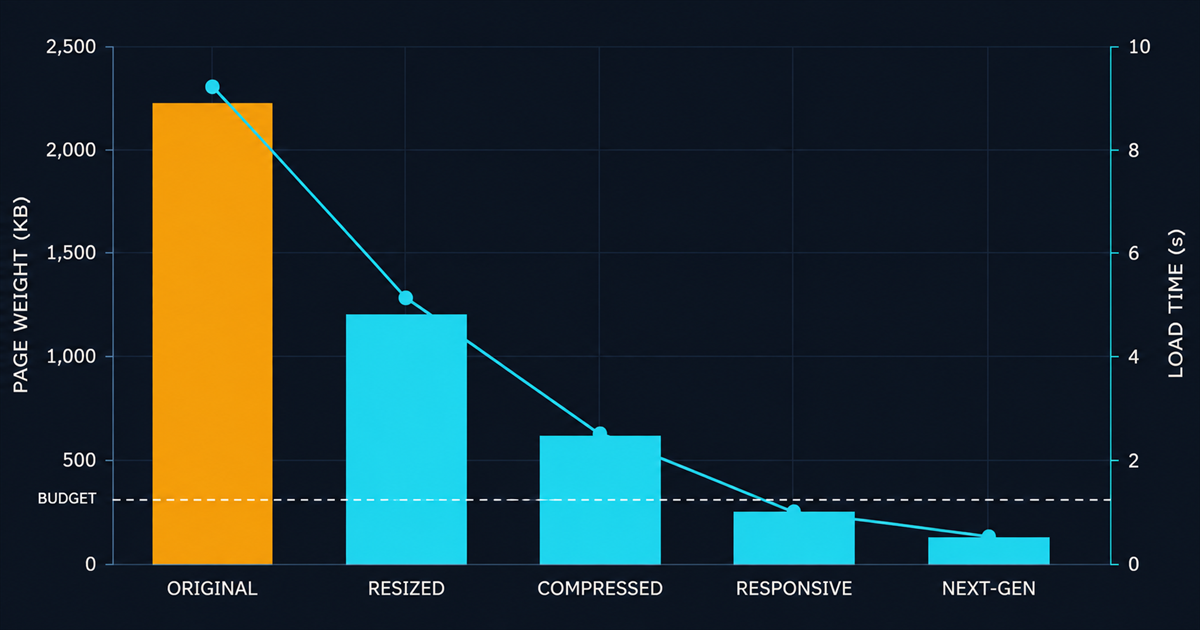
    A bar chart of page weight by asset source with a tall amber original bar and four descending cyan bars, overlaid by a load time line and a dashed budget rule

    What “delivery” has to cover

    Five capabilities. If the platform does not have them, you are building them.

    Resize on request. Any dimension, from a URL, without pre-generating variants. Not a fixed set of preset sizes chosen at configuration time, because the sizes you need change with every design refresh.

    Automatic format selection. Serve AVIF to browsers that support it, WebP to those that support that, JPEG to the rest, from one URL. AVIF support is broad enough now that this is a substantial and immediate payload reduction, and WebP covers essentially everything else. The MDN image format guide is the reference for what each format is actually good at.

    Automatic quality. Compression tuned per image rather than a global setting. A flat quality number is always wrong somewhere: too aggressive on a gradient, too generous on a flat graphic. Content-aware quality selection removes an entire category of manual tuning.

    Content-aware cropping. A 1:1 crop of a wide product shot should keep the product, not the geometric centre. Doing this by rule produces bad crops at volume; doing it by hand does not scale. Cloudinary bundles these three under automatic format, quality and gravity, with the cropping mechanics in resizing and cropping.

    Edge caching with sane invalidation. Derivatives cached close to users, and a versioned URL scheme so replacing a master produces a new address rather than requiring a purge across a content delivery network.

    Why this is a business number, not an engineering preference

    Image weight is usually the largest single contributor to Largest Contentful Paint on a content or commerce page, and LCP is the metric that most directly tracks perceived load speed.

    Two consequences that belong in the business case rather than the technical appendix:

    Bandwidth cost. You are paying to serve every byte. Get your current monthly image bytes from your CDN, model the reduction from automatic format and quality, and price it at your existing rate. This is a real number from an existing invoice, which puts it in the most credible benefit category in the business case.

    Conversion. Page speed affects conversion. State the mechanism, do not put a percentage in the case unless you can run the experiment yourself. Borrowed conversion statistics are the fastest way to lose a reviewer’s trust, and the effect is real enough that you do not need to inflate it.

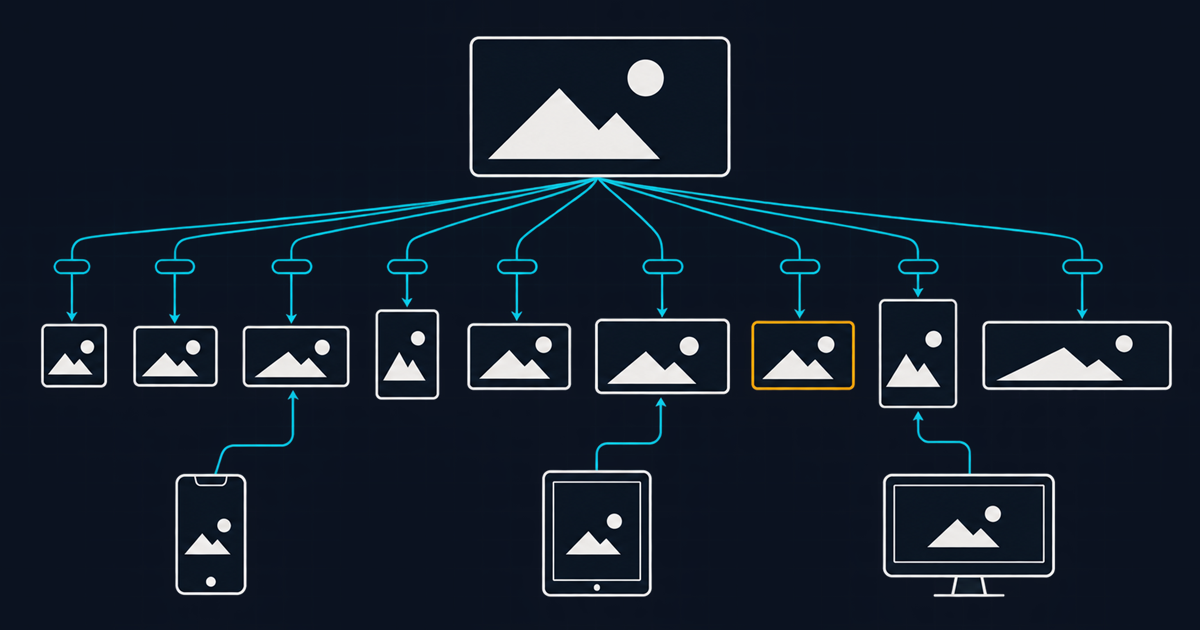
    A responsive delivery ladder with one master card feeding nine derived output rectangles by parameter, three device outlines pointing at their rungs

    Responsive is the part that breaks stored variants

    This is the argument that settles the derived-versus-stored question on technical grounds rather than economic ones.

    A modern responsive page does not know what size image it needs until the browser knows its own viewport, its device pixel ratio, and the layout after CSS has run. The correct width might be 412 pixels, or 824, or 1236. Multiply that by every breakpoint, every density and every art-directed crop and the set of required derivatives is combinatorially large and not knowable in advance.

    Stored variants cannot serve that. You end up picking six sizes, serving the nearest larger one, and shipping between twenty and sixty percent more bytes than necessary on most devices.

    Derived delivery can, because the size is a parameter and the result is cached on first request. Responsive image delivery covers the mechanics along with the srcset and sizes generation. The important property is that the first request for an uncommon width is slightly slower and every subsequent one is a cache hit, so real traffic converges on cached almost immediately.

    What about the CDN we already have?

    Reasonable question, and the answer depends on which of two things your CDN does.

    A plain CDN caches and serves bytes. It does not resize, convert format, or crop. Put one in front of a DAM that only serves originals and you have fast delivery of oversized images, which is a smaller improvement than it sounds.

    An image CDN transforms on the way through. Cloudflare Images, imgix and ImageKit all do this well, and they are legitimate answers if your DAM genuinely cannot deliver.

    The trade-off is worth stating plainly rather than dismissing. A separate image CDN gives you a good transformation layer and a second system to operate, with its own origin configuration, its own cache semantics, and its own answer to the question of what happens when a master is replaced or a licence expires. That last one matters more than it looks: an expiry event in the DAM has to propagate to the image CDN, and that propagation is your problem to build and to test.

    Where the DAM and the delivery layer are the same platform, that class of problem does not exist, which is the same argument made from the architecture side in single source of truth is an architecture.

    Extreme macro of a printed halftone rosette on paper fibre under raking cyan light, degrading into amber blocky compression artefacts on the right third

    What to test in an evaluation

    Half a day, and it separates the field faster than any feature matrix.

    1. Upload one large photograph. Request it at five widths, in three formats, with two crop strategies, by editing the URL. Time to first byte on a cold request, and again on a warm one.
    2. Compare bytes against what your site currently serves for the same image at the same rendered size. That ratio is your bandwidth saving, measured rather than claimed.
    3. Replace the master. Confirm that existing references pick up the new version, that old versioned URLs still resolve, and that nothing required a manual purge.
    4. Check the cache headers the platform sets by default. Immutable derivatives should carry a long max-age. If they carry a short one, your cache hit rate will be poor and your costs high.
    5. Test a restricted asset. Confirm its delivery URL does not resolve without authorisation, using the mechanism in access control on delivery. Public-by-default delivery is a common misconfiguration and it belongs in the security review described in access control, SSO and audit trails.

    Accessibility travels with delivery

    One thing that gets separated from this discussion and should not: alt text is part of correct delivery, not a content afterthought.

    If the DAM holds a default description on the asset and the consuming system fetches it alongside the URL, alt text is present by default and only overridden where context demands it. If the DAM holds it and nobody fetches it, every consuming system reinvents it or omits it, and omission is the usual outcome. The WCAG overview covers the requirement, and the field ownership question is settled in who owns which record.

    Ask in every demo whether the delivery API returns the descriptive metadata alongside the asset. Surprisingly often the answer is no, and that single gap is why so many sites have empty alt attributes on images that were properly described upstream.

    The one-line version

    If the answer to “how does an image get from the DAM onto a page at the right size and format” is “the web team handles that”, you have not finished the evaluation. You have deferred a system.

    The API characteristics that make this work are in headless DAM, the patterns for wiring it up are in integration patterns for an enterprise DAM, and if delivery turns out to be your dominant requirement, alternatives to a traditional enterprise DAM is the more useful starting point than a classic DAM shortlist.

  • Single source of truth is an architecture, not a slogan

    Single source of truth is an architecture, not a slogan

    The slide says single source of truth. The architecture diagram behind it has the DAM in the middle with arrows going out to five systems, and every one of those arrows is labelled sync.

    That is not a single source of truth. That is six sources of truth with a preferred one and a nightly job that hopes.

    Short answer: you have a single source of truth when consuming systems hold a reference rather than a copy, and derivatives are produced on request rather than stored. Everything else is replication with a favourite. The test is concrete: change the master and count how many systems need to be told. If the answer is more than zero, you have copies, and copies diverge.

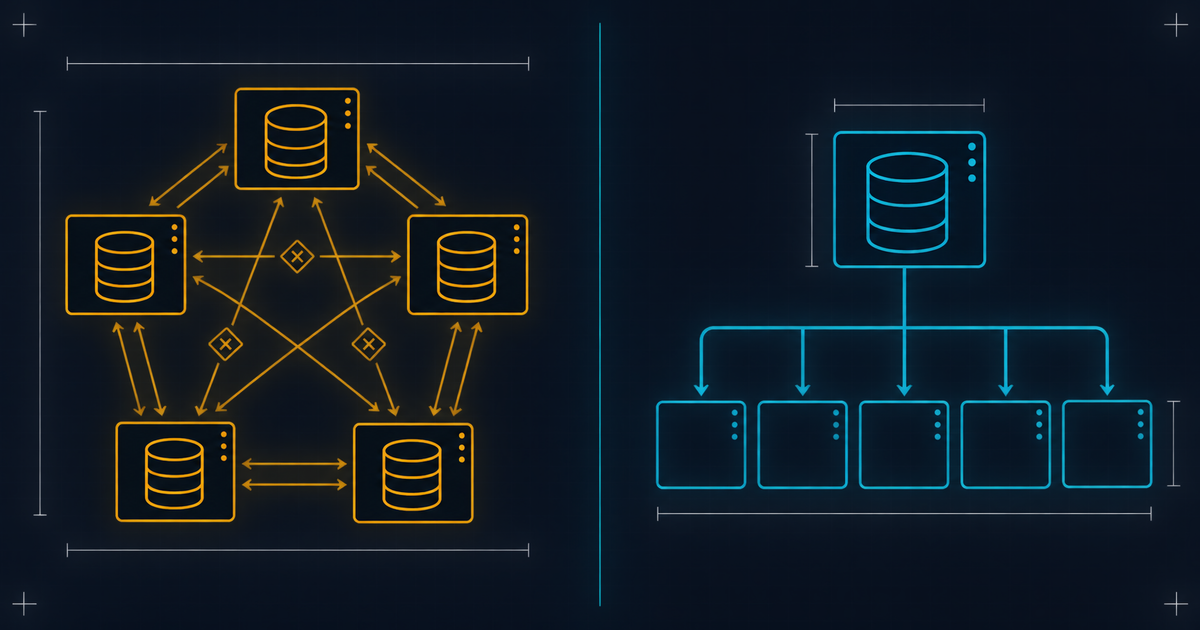
    A schematic split by a vertical rule: five amber store blocks each holding a copy with chaotic sync arrows on the left, one cyan master feeding five consumer panels through a single reference bus on the right

    The two architectures

    Replication. The DAM holds the master. Each consuming system receives a copy, stores it, and serves it. Sync jobs or events keep the copies aligned.

    This is how most enterprise estates actually work, and it is not stupid. It is what you get when the consuming systems were built to hold files, which most of them were. It has three permanent costs: storage multiplied by the number of consumers, a divergence window between the master changing and each copy catching up, and a class of bug where one copy silently stops updating and nobody notices for months.

    Reference and derivation. The DAM holds the master. Each consuming system holds an address. When a page renders, the asset is fetched from the media platform, transformed to the requirements of that surface, and cached at the edge.

    Storage is one master. The divergence window is zero, because there is nothing to diverge. And the failure mode changes from silent staleness to a visible outage, which sounds worse and is much better, because you find out immediately.

    The property that makes it work

    Reference-only architecture is only viable if the platform can produce any derivative on demand. Otherwise consumers legitimately need their own copies, because their requirements differ.

    That is the hinge. When the 400 by 400 thumbnail is a URL parameter rather than a file, the commerce platform does not need a copy. When the 16:9 hero crop is a parameter, the CMS does not need a copy. When the print-resolution CMYK version is a parameter, the print pipeline does not need a copy.

    The Cloudinary transformation reference is the full parameter vocabulary for that model, and responsive images covers the case where the required size is not known until the browser knows its own viewport, which no stored-variant approach can handle at all.

    Without derivation, “single source of truth” degrades into “the place the copies come from originally”, which is a genuinely weaker claim and should be described as such in your architecture documents.

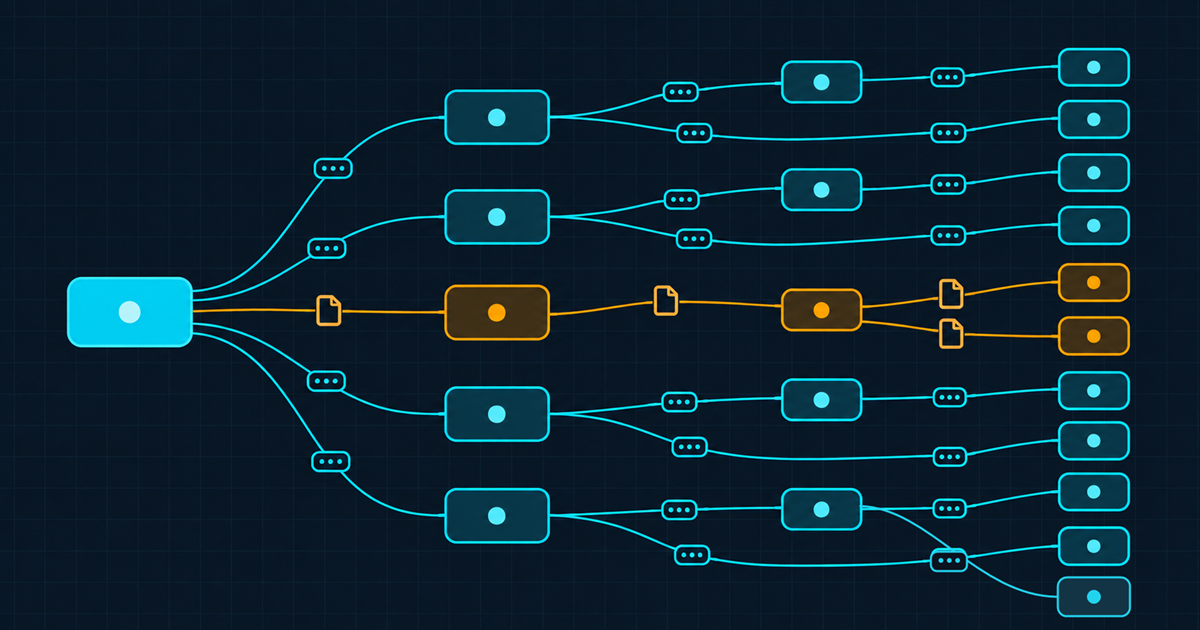
    A lineage graph with a cyan root fanning through two generations to eleven leaves, edges carrying parameter chips, one amber branch carrying file icons instead

    Where the copies come from

    Four legitimate reasons systems keep copies. Each has a specific answer.

    Performance. “We cache locally so the page is fast.” Reasonable instinct, wrong solution. Edge caching on immutable derivative URLs gives you the same latency without the storage or the staleness. The mechanics are standard HTTP caching, and the key is a version token in the URL so a replaced master produces a new address rather than requiring a purge.

    Availability. “What if the media platform is down.” A real concern that deserves a real answer rather than a copy. Assess the delivery network’s actual availability, decide whether images are on your critical rendering path, and if they are, handle it with graceful degradation and a fallback rather than with a full replica you now have to keep current.

    Offline or air-gapped use. Print production, exhibition systems, field distribution. Genuinely legitimate. Export deliberately, mark the export as a point-in-time snapshot, and do not pretend it is synchronised.

    The consuming system cannot reference. Some legacy systems can only ingest files. This is the honest case for a scheduled sync, covered as pattern three in integration patterns for an enterprise DAM. Treat it as debt with a name, not as the architecture.

    Anything outside those four is a copy that exists because nobody asked whether it needed to.

    How do you test whether you have it?

    Five questions. Run them against your current estate and the answer will be uncomfortable and useful.

    1. Change a master. How many systems need to be told? Zero is reference architecture. Any other number is replication.
    2. Delete a master. What happens to the derivatives? They should stop resolving immediately. If copies survive deletion, you cannot execute a takedown, a rights expiry, or a privacy deletion request, and that is a compliance problem rather than an architectural preference.
    3. Count distinct masters, then count total stored files. The ratio is your replication factor. It should be close to one.
    4. Ask for a new aspect ratio for a new channel. If the answer is a batch job, you are storing variants. If it is a string change, you are deriving them.
    5. Who can edit the description field? If more than one system allows editing, you have two sources of truth for that field regardless of what the diagram says. The ownership discipline for this is in who owns which record.

    What single source of truth does not mean

    Three misreadings that cause real design errors.

    It does not mean one system holds everything. Product data belongs in the PIM and page structure belongs in the CMS. Single source of truth is per field, not per system. Every field has exactly one authoritative home, and different fields have different homes.

    It does not mean no caching. Caches are copies with a defined lifetime and an eviction policy, which is what makes them different from replicas. A cache that never expires is a replica wearing a disguise.

    It does not mean one physical store. Backups, disaster recovery replicas and archive tiers are all copies and all correct. The distinction is that none of them is independently editable. A copy that cannot be written to is not a second source of truth, it is durability. Version management and backup is the sanctioned form of this.

    Extreme macro of a mirror-flat lapped gauge block on a granite surface plate reflecting a cyan light bar, with an amber reflection from a misaligned second block

    Version identity is the part people get wrong

    If derivative URLs are immutable and cacheable, replacing a master has to produce new URLs. Otherwise you are choosing between short cache lifetimes, which costs performance, and stale images, which costs correctness.

    The standard solution is a version token in the address, so .../v1718294/asset.jpg becomes .../v1719901/asset.jpg when the master changes. Old URLs keep resolving to the old bytes, which is usually what you want for anything already printed or emailed, and new references pick up the new version automatically.

    Two consequences worth designing for deliberately:

    • Consuming systems must store the reference without the version, and resolve the current version at render time. Otherwise every consumer holds a pinned old version and you are back to replication, just with URLs instead of files.
    • You need an explicit policy on whether replacing an asset should update existing placements. Sometimes yes, a corrected logo. Sometimes no, an image in a published legal document. That is a business rule and it belongs in the asset lifecycle, not in whatever the platform happens to do by default.

    The compliance argument

    The strongest case for this architecture is not efficiency, it is that certain obligations are only executable under it.

    When a licence expires, the asset has to stop being served. When someone exercises a deletion right over a photograph in which they are identifiable, every instance has to go. When a claim is disputed, an image has to come down within hours across every surface.

    Under reference architecture those are one operation on one object. Under replication they are a search, across systems you may not control, with no guarantee you found everything. The rights model that depends on this is in rights and expiry as first-class asset data, the access half is in access control, SSO and audit trails, and the API properties that make it possible at all are in headless DAM.

    If you are still building the foundational case, what enterprise DAM actually is covers the ground underneath this one.

    Related field note

    Continue with A decision matrix for integration architecture.

  • Integration patterns for an enterprise DAM

    Integration patterns for an enterprise DAM

    The DAM goes live and works. Six months later there are eleven integrations, four of them written by a contractor who has left, two of them polling every sixty seconds for changes that happen twice a week, and one that nobody can turn off because they are not sure what breaks.

    That is not a technology failure. It is what happens when eleven integrations get built as eleven decisions instead of as instances of four patterns.

    Short answer: almost every DAM integration is one of four patterns. Reference by URL, event-driven push, scheduled synchronisation, or embedded picker. Pick deliberately, because the wrong choice is not wrong on day one, it is wrong in month nine when the volume changes. The default should be reference by URL, and everything else needs a reason.

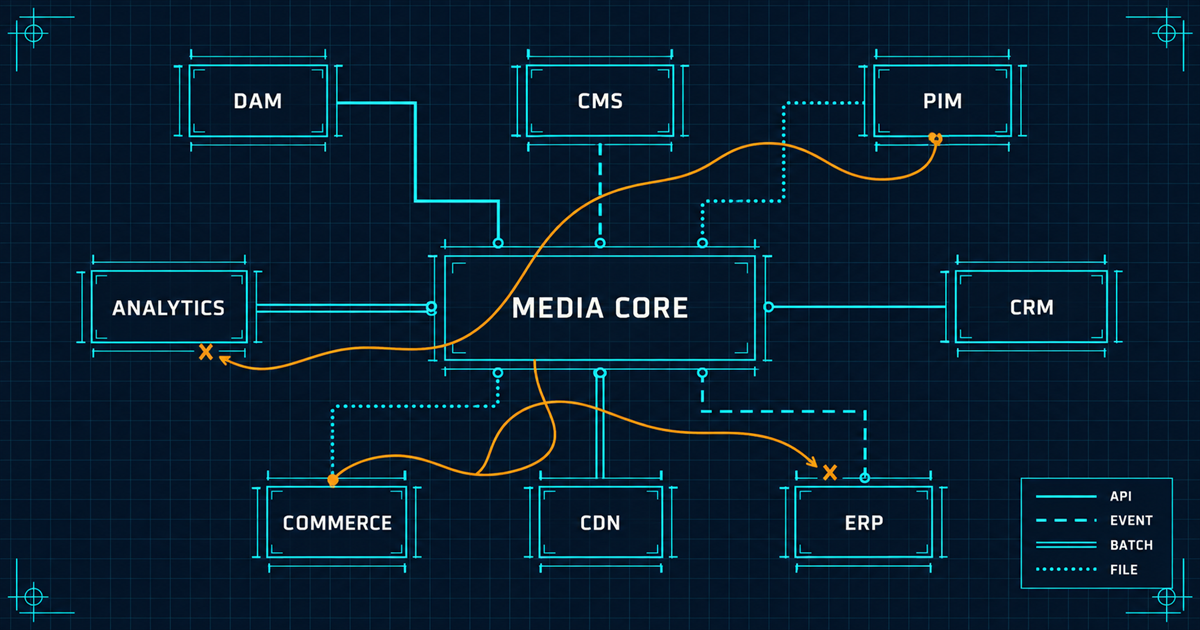
    A large orthographic schematic of a central media core with eight labelled satellite systems, four line treatments for four integration patterns, and two amber point-to-point connections crossing untidily

    Pattern one: reference by URL

    The consuming system stores a URL, not a file. When a page renders, the browser fetches the asset directly from the media platform, with the required transformation expressed in the URL itself.

    Use it for anything rendered to an end user. Websites, applications, emails, partner pages, product feeds. This should be your default and it covers more ground than people expect.

    Why it wins. There is one copy of the asset, and it lives in the system of record. Update the master and every surface updates. Add a new size and it is a string change. Nothing to sync, nothing to invalidate, no storage duplicated across five systems.

    The prerequisite is that the platform can produce derivatives from the URL. If it cannot, this pattern degrades into “reference the original and let the browser download 4MB”, which is worse than the alternatives. Cloudinary’s URL delivery model is the reference for what to look for: the transformation is part of the address, the result is cached at the edge, and the origin is untouched.

    How it fails. Two ways. Someone hardcodes a transformation string across the codebase and it becomes unchangeable, which is solved by named presets or a small helper. And the delivery domain becomes a hard dependency on your critical rendering path, which is a real availability consideration and belongs in your architecture review.

    Pattern two: event-driven push

    The DAM emits an event on a state change and the consuming system reacts. Asset approved, so publish it. Licence expired, so unpublish it. Asset replaced, so purge the cache.

    Use it for anything where a state change must cause an action within minutes, and for keeping downstream indexes current.

    Why it matters for governance. This is the mechanism that turns policy into behaviour. An expiry date in a field is a report. An expiry date that fires an event is a control, which is the distinction drawn in the governance framework. Cloudinary’s notification system covers upload, moderation and transformation events, which is the typical set.

    How it fails. Reliably, and always the same way: nobody handles redelivery. Webhooks arrive more than once, arrive out of order, and occasionally do not arrive. Your handler must be idempotent, must verify the signature, and must have a reconciliation job behind it that catches what was missed. Teams that skip the reconciliation job discover the gap during an incident, which is an expensive way to learn it.

    Four small pattern cards in a row showing point-to-point, hub and spoke, event driven and embedded widget topologies, the point-to-point card visibly tangled and tinted amber

    Pattern three: scheduled synchronisation

    A job runs on a schedule, pulls changed assets or metadata, and updates the target system.

    Use it for systems that genuinely cannot accept a reference or an event. Print production, legacy ERP, offline distribution, partner drops, and anything behind a boundary that will not allow inbound calls.

    Why it is the last resort. It creates a second copy, which creates a divergence window, which creates the question “which one is right” that the DAM existed to eliminate. It is also the pattern most likely to still be running in five years after everyone forgot why.

    How to make it survivable. Sync on a cursor rather than a full sweep, so cost scales with change rather than with library size. Record what was synced and when. Make it restartable. And give it an owner, because an unowned scheduled job is a future incident with a date on it.

    How it fails. Full-table syncs that took four minutes at launch and take six hours at year three, running into the next window and overlapping with themselves.

    Pattern four: embedded picker

    The DAM’s asset selection interface is embedded directly in the consuming application, so an author picks an asset without leaving the CMS, the commerce admin or the campaign tool.

    Use it for any human-facing authoring workflow. This is the single highest-leverage adoption intervention available to you, and it is consistently underrated in architecture reviews because it looks like a UI concern.

    Why it matters. People use the path of least resistance. If choosing an approved asset requires opening a second system, searching, downloading, and uploading, a meaningful fraction of your authors will use the file on their desktop instead. Embedding removes four steps and, with them, most of the shadow library. Media library widgets are the standard mechanism.

    How it fails. Authentication. The picker needs to know who the user is without a second login, which means the embedding application has to pass identity properly. Get this wrong and you have built a beautiful component that everybody dismisses because it asks them to log in again.

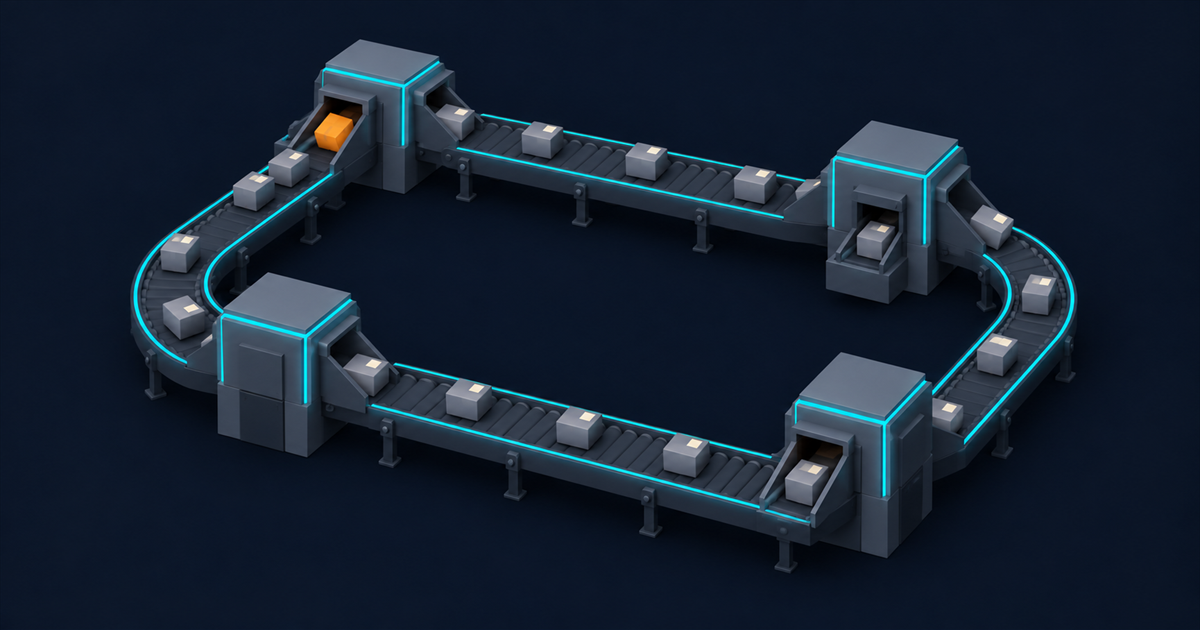
    An isometric conveyor loop carrying tagged parcels between four station blocks, with one station jammed amber and parcels backed up behind it

    Point to point versus a hub

    At three integrations, direct connections are fine. At eleven, they are a maintenance liability, because every consuming system has its own understanding of your schema and every schema change is eleven coordinated deployments.

    The usual correction is a thin integration layer that owns the mapping, so schema changes land in one place. Two cautions from having watched this go wrong:

    Do not put the hub on the read path. Rendering should go direct to the delivery URL. A hub in front of image delivery is a bottleneck and an availability risk for no benefit.

    Do not let the hub accumulate business logic. It should map and route. The moment it starts deciding which crop a channel gets, you have a second system of record and you are back where you started.

    How do you keep integrations from rotting?

    Four practices. None are clever and all are skipped.

    • A register. Every integration listed with its pattern, owner, credential, and what breaks if it stops. This document takes an afternoon and it is the difference between a controlled estate and archaeology.
    • Service accounts, not personal ones. An integration running under a departed employee’s credential is an outage scheduled for the day IT does its access review. This is also an audit finding, covered in access control, SSO and audit trails.
    • Server-side signing. Any write path from a browser gets signed requests generated server-side. Keys never reach a client. There is no acceptable exception to this.
    • Cache headers you chose. Long max-age on immutable derivative URLs, with a version token so a replaced master produces a new URL rather than requiring a purge. The HTTP caching guide covers the mechanics, and getting this right is most of the win described in delivery is part of your DAM.

    The decision, compressed

    Ask two questions per integration and the pattern falls out.

    Does a human select the asset? If yes, embedded picker for the selection and reference by URL for the rendering. If no, continue.

    Does the consuming system need the bytes, or just the address? If the address, reference by URL. If the bytes, event-driven push where the system can receive calls, scheduled sync where it cannot.

    That is genuinely the whole decision tree. The complexity in most estates comes from making this choice implicitly, once per project, under delivery pressure, rather than deciding it once as an architecture standard.

    Before you build any of it, settle which system owns which field, because an integration that moves a field between two systems that both allow editing is not an integration, it is a future data quality incident. That map is in who owns which record, the API surface these patterns depend on is in headless DAM, and the architectural principle underneath all of it is in single source of truth is an architecture. For the wider context, what enterprise DAM actually is.

  • Headless DAM: when the API is the product

    Headless DAM: when the API is the product

    Every DAM vendor has an API now. That sentence is true and almost entirely uninformative, because it covers both a system designed API-first and a system where someone exposed nine endpoints in 2021 to close a deal.

    The distinction is not marketing. It determines whether your integration project takes six weeks or six months, and whether the platform can serve channels that do not exist yet.

    Short answer: headless DAM means the API is the product and the web interface is one client of it, with no privileged access. The test is simple. Anything a user can do in the interface, you can do over the API, with the same permissions model and the same validation. If there is a gap, the API is a reporting layer with delusions, and every integration you build will eventually hit the edge of it.

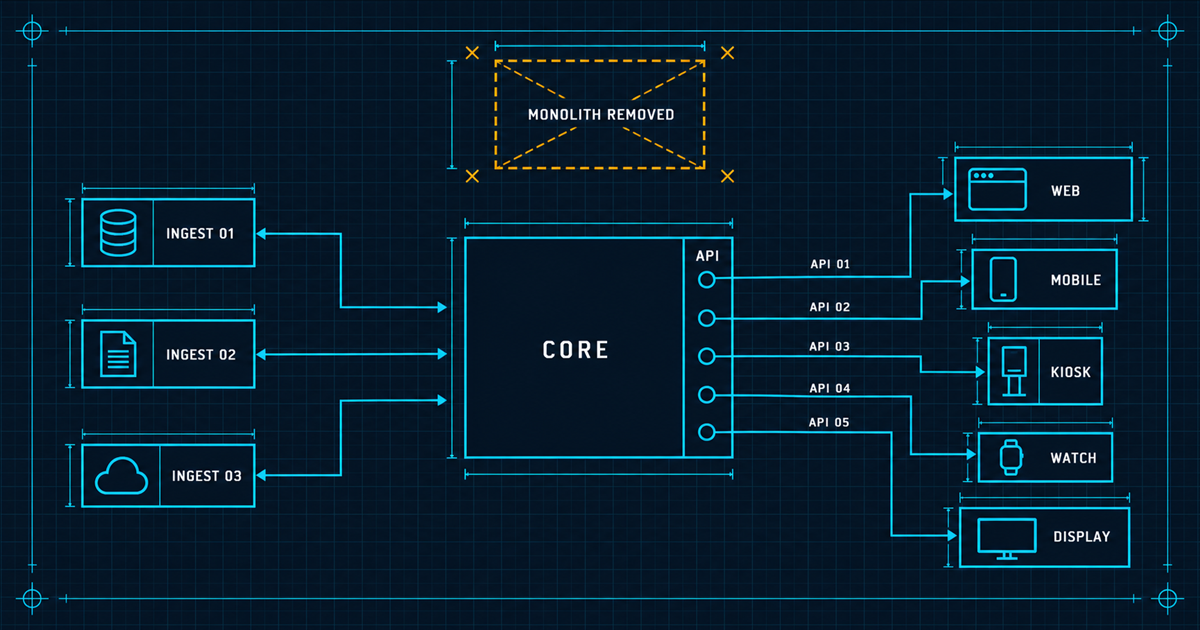
    An orthographic schematic of a core block with an API port array feeding five consumer panels, with the space where a monolithic front end would sit left as an empty dashed outline

    Why this became the architecture rather than a preference

    Ten years ago the DAM was a destination. People logged in, browsed, downloaded, and took the file somewhere else. The interface was the product because the interface was where the work happened.

    That is no longer where the work happens. Assets are consumed by a commerce platform, a headless CMS, a mobile app, a partner portal, a print automation pipeline, an email service, and increasingly by agents assembling pages without a human in the loop. Every one of those is a machine reading a machine. None of them can use a login form.

    So the interface stopped being the product and became one consumer among many, usually not even the busiest one. A platform whose capabilities live primarily in its interface is a platform whose capabilities are unavailable to most of its actual traffic.

    The four questions

    Ask these in the technical evaluation. They are quick, they are answerable in a live session, and they separate the field fast.

    1. Is the interface built on the public API? Open the browser network tab, perform an action in the vendor’s own interface, and look at what it calls. If those are documented public endpoints, the API is real and it is exercised by the vendor’s own team every day. If they are private endpoints with a different auth scheme, you are getting a second-class API and it will lag the interface forever.

    2. Can you define and enforce schema over the API? Not just read and write field values, but define the fields, their types and their controlled lists, and have those validated on every write path. If validation lives only in the upload form, then every integration is a bypass and your data quality is a function of developer discipline.

    3. Is search a real query interface? Filtering by folder is not search. You want expressions over your own metadata fields, with boolean composition, sorting and pagination that works past the first thousand results. The Cloudinary Admin API exposes resource search as a queryable expression rather than a folder walk, which is the shape to look for.

    4. What is the SDK and documentation situation? An API you have to hand-roll HTTP against is an API that will be integrated once, badly, by whoever is available. Breadth matters here because you will not get to choose which language the next consuming team writes in. Cloudinary publishes SDKs across roughly seventeen languages and frameworks, which is at the upper end of the category and worth using as a benchmark when a vendor tells you their two SDKs are sufficient.

    An isometric matte cube with six machined sockets of different key shapes and six floating connector plugs, one of them amber and matching nothing

    Delivery is part of the API surface

    This is the part that gets separated in evaluations and should not be.

    In a classic DAM, retrieval means download. You call an endpoint, you get bytes, and then it is your problem: resize it, convert it, cache it, put it on a CDN, invalidate it when it changes. That is four systems and a cache invalidation bug waiting to happen.

    In an API-first media platform, the delivery URL itself is the interface. You express what you want as parameters and the correct derivative is produced and cached at the edge. The Cloudinary transformation reference is the full parameter vocabulary, and advanced URL delivery options covers the addressing rules.

    The practical consequence is worth stating plainly, because it is easy to read this as a convenience feature. When a rendition is a URL parameter, no second file exists. Nothing to store, nothing to keep in sync with the master, nothing to purge when the master changes, nothing to migrate. A new channel with a new aspect ratio is a string change, not a batch job. That is the difference discussed at more length in delivery is part of your DAM.

    What about agents?

    This is genuinely new and worth a paragraph rather than a section, because the hype exceeds the shipped reality in most places.

    More of the software that consumes your assets is now written by, or driven by, language models. That changes what “good API” means in one specific way: the model has to be able to work out how to use it from documentation alone, in one pass, without a human debugging its first three attempts.

    Practically that means predictable URL structure, documentation served as markdown rather than a client-rendered application, and machine-readable descriptions of what the platform can do. Cloudinary ships an LLM and MCP integration layer covering exactly this: a set of remote Model Context Protocol servers, an llms.txt, and a rules file that steers models toward syntactically correct transformation URLs rather than plausible-looking wrong ones.

    Whether that matters to you depends on how much of your integration work is now agent-assisted. For most enterprise teams the honest answer in 2026 is “some, growing”. It is not a reason to select a platform on its own. It is a reasonable tiebreak, and it is a decent proxy for whether the API was designed to be read by something that has never seen it before.

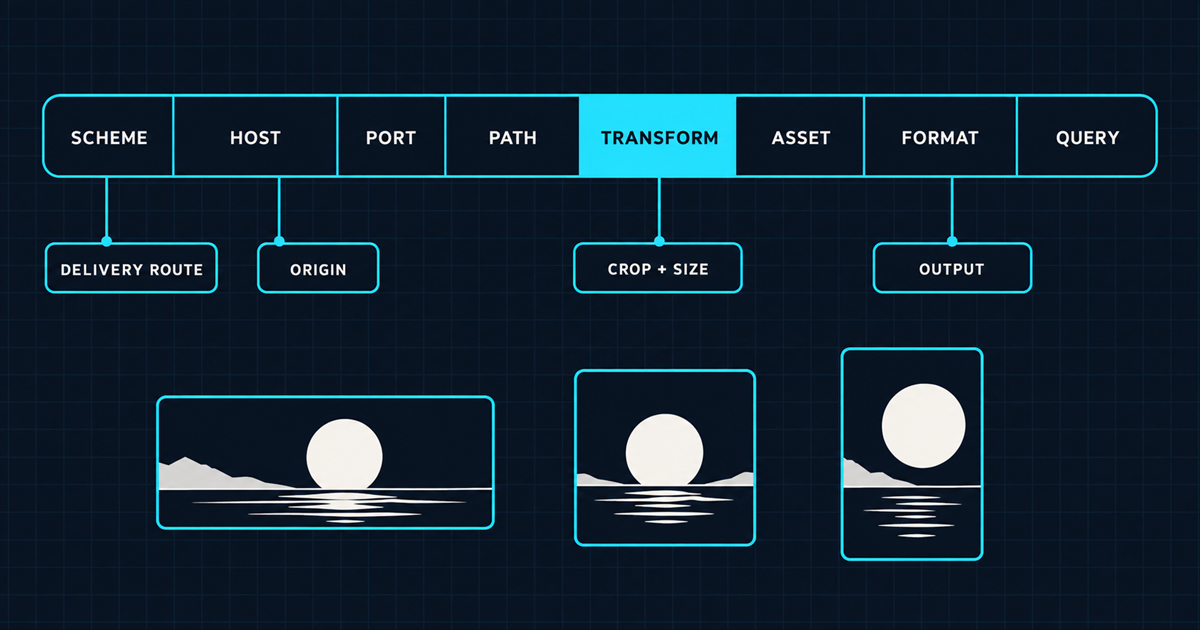
    A URL anatomy bar broken into eight labelled segments with callouts, and three preview rectangles of different aspect ratios fanning out below

    Authentication, because this is where pilots die

    Two things to confirm before you build anything.

    Server-side signing for writes. Any upload path that runs from a browser needs signed requests generated server-side, so credentials never reach the client. Signed uploads is the standard pattern and every serious platform has it. If a vendor suggests putting an API key in your front-end, that is a complete answer to the evaluation.

    Standards-based delegation for user-facing access. If people will access assets through your own applications, you want OAuth 2.0 with OpenID Connect for identity and JWT for token format, not a proprietary scheme. Proprietary auth is the single most reliable predictor of an integration that takes three times its estimate.

    When headless is the wrong call

    Two situations where an API-first platform is genuinely a worse fit, and it is worth naming them.

    Your primary users are non-technical and the interface is the workflow. If the brand team, the agencies and the regional marketers spend their day in the DAM itself, browsing, collecting and downloading, then interface quality is not a nice-to-have and you should weight it accordingly. Some API-first platforms have thin interfaces because their centre of gravity is elsewhere. That is a real trade-off, not a flaw.

    You have no engineering capacity. An API is only an asset if someone can use it. If the DAM will be run entirely by a marketing operations team with no developer support, a well-designed closed suite with pre-built connectors will serve you better than a superior API you cannot call. This is one of the honest splits in the platform comparison.

    For everyone else, the API is the part of the system that will still be load-bearing in eight years, long after the interface has been redesigned twice. Weight it accordingly, and see integration patterns for an enterprise DAM for what you will actually build on top of it. The wider argument for keeping one master addressable by everything is in single source of truth is an architecture, and if you are earlier than that, start with what enterprise DAM actually is.

    Related field note

    Continue with Procurement scorecards: the failure mode teams miss.