Blog

  • What enterprise DAM costs, line by line

    What enterprise DAM costs, line by line

    A vendor quotes 180,000 a year. Finance approves it. Two years later the programme has cost roughly double that and nobody can point at the moment it went wrong, because nothing went wrong. The quote was accurate. It was just answering a narrower question than anyone thought.

    Short answer: budget the licence at somewhere between forty and sixty percent of your actual five-year cost. The rest is integration, migration, storage and delivery overage, and the people who run it. The people line is usually the largest single item and it is almost never in the business case, which is why so many DAM programmes are technically successful and commercially disappointing.
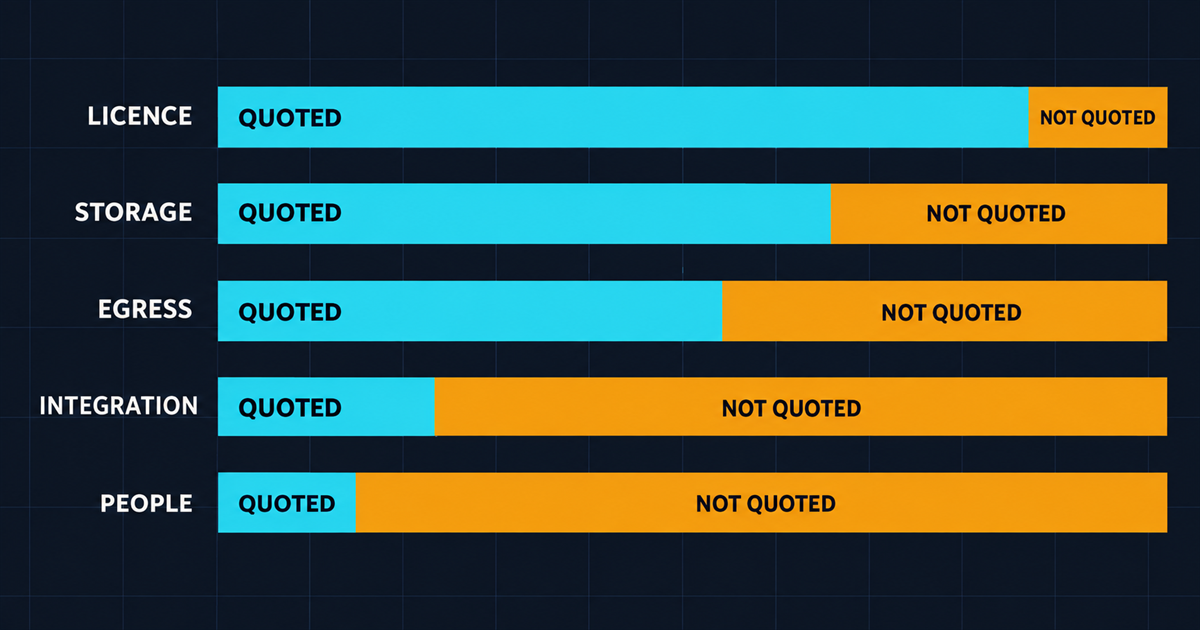
    A horizontal stacked bar chart of five cost categories, each split into a cyan quoted portion and an amber not-quoted portion that dominates integration and people

    The full cost stack

    Six lines. Build the model with all of them or you are not comparing vendors, you are comparing quotes.

    1. Platform licence. The number on the proposal. Usually banded by seats, storage, or some composite. Ask specifically what happens on renewal, because year-one discounting is standard and the uplift in year two is where the real price lives.

    2. Implementation and integration. Configuration, schema build, permission model, and connecting the DAM to everything that consumes from it. Vendors will quote the first three and not the fourth, because the fourth depends on your estate. In practice this runs from thirty to a hundred percent of first-year licence, and the variable is how many systems and how good their APIs are. Integration patterns is where that number actually gets set.

    3. Migration. Moving and describing the existing library. Cost scales with how bad your current metadata is, not with how many terabytes you have. Ten terabytes of well-described material is a cheap migration. Two terabytes of IMG_4471_final_v3.jpg is not, and the reasons are in migrating a million assets.

    4. Storage. Usually straightforward and usually small. The trap is not the rate, it is the multiplier. If your platform stores every rendition as a separate file, you are paying for the master plus every crop, every format and every size, forever. A derived-rendition model stores the master only.

    5. Delivery and bandwidth. The line most often underestimated, because nobody models it until they are live. If your DAM also serves your public web traffic, this is a real number that scales with your marketing success. If it does not serve public traffic, you are paying for a separate CDN somewhere else and should count that here too.

    6. People. A DAM manager or information governance lead, plus a share of a developer, plus the taxonomy and cataloguing time that has to come from somewhere. At mid enterprise scale this is typically 0.5 to 1.5 full-time equivalents on an ongoing basis. Fully loaded, that frequently exceeds the licence.
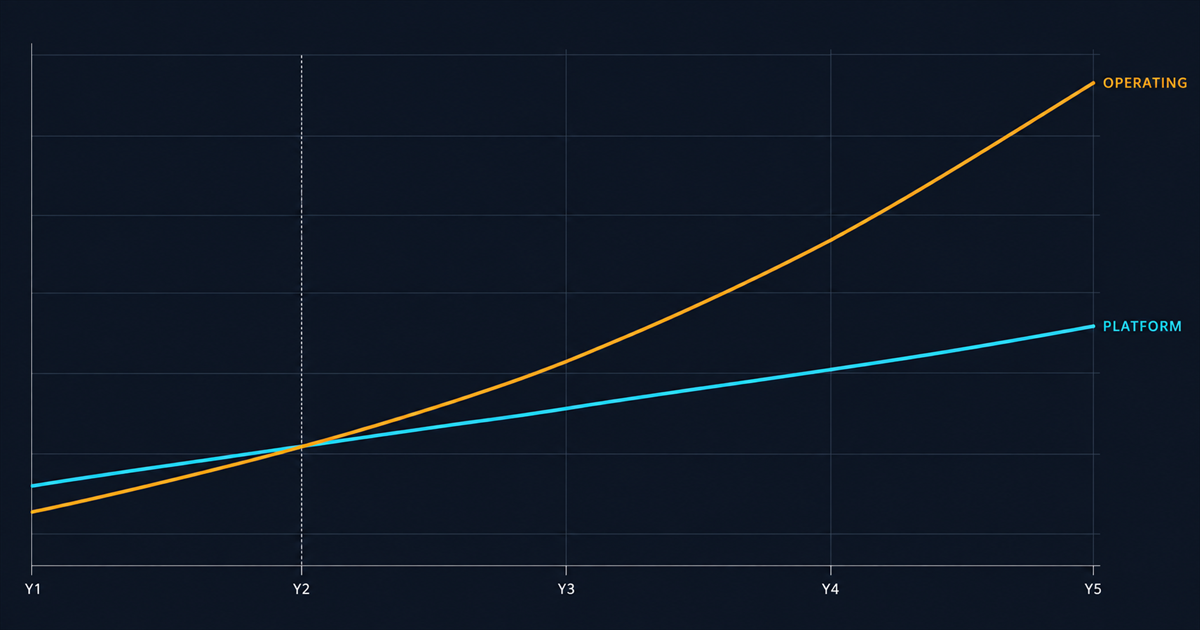
    A five-year cumulative cost chart with a smooth cyan platform line crossed at year two by a steeper amber operating line

    The three commercial models

    Vendors price on one of three bases and they are not equivalent. Which one suits you depends almost entirely on your shape.

    Per seat. Predictable, easy to approve, and it prices the thing you least want to restrict. Every seat you do not buy is a person who emails a colleague for the file instead, which is exactly the behaviour you are paying to eliminate. Watch for the distinction between full users and consumer or read-only users, because the ratio is usually ten to one and the pricing difference is where the negotiation lives.

    Per volume. Storage, bandwidth, transformations, API calls, or a composite unit. Scales with usage rather than headcount, which means adoption success shows up as a cost increase. That is not a reason to avoid it, but it does mean you need a forecast and a monitoring habit, not just a budget line.

    Enterprise agreement. Custom, negotiated, usually unbanded. Fine, and often the right answer at scale, but it removes your ability to benchmark. Get at least one banded quote from a comparable vendor so you know what you are being asked to pay a premium for.

    Cloudinary is a useful reference point on the volume model because its pricing is published rather than gated, which is unusual in this category. The published tiers run from a free plan at 25 credits per month, through Plus at 99 dollars per month for 225 credits, to Advanced at 249 dollars per month for 600 credits, with enterprise agreements custom. The credit is a composite unit, and the definition is worth reading before you model anything: one credit covers 1,000 transformations, or 1 GB of managed storage, or 1 GB of delivered bandwidth, and you spend across those as you use them.

    That composite structure is the part to model carefully. It is genuinely flexible, and it means your bill responds to the mix of what you do rather than to a single dimension. It also means a rough forecast needs three inputs rather than one.

    Two details that materially change the arithmetic: transformations and bandwidth are measured over a rolling thirty-day window while storage reflects your current total, and re-delivery of an already-generated derivative does not count as a new transformation. The second one matters a lot. It means a heavily-cached public site costs far less in transformation terms than a naive calculation suggests.

    Which lines do vendors leave out?

    Reliably four, and none of it is dishonest. They are quoting their product, and these are your costs.

    • Your integration effort. They quote their connector. They do not quote the six weeks your team spends on the other side of it.
    • Delivery at production volume. Pilot traffic is not production traffic. Ask for the overage rate in writing, not just the included allowance.
    • Ongoing cataloguing. Somebody describes the assets. That somebody costs money whether they sit in your team or an agency.
    • The second-year uplift. Ask for a capped renewal in the contract. This single clause is worth more than most of the feature negotiation.

    A fanfold invoice cascading across deep navy under raking light, most lines grey, three circled in amber, one page edge tabbed in cyan

    Where the money actually goes wrong

    Not in the negotiation. In three specific decisions made after signature.

    Storing renditions instead of deriving them. Every stored variant is storage you pay for, a sync problem you own, and a migration item later. If the platform can produce a crop from a URL parameter, use that, and the Cloudinary resizing documentation shows the shape of it. This is the difference between a storage line that grows with your library and one that grows with your library times fifteen.

    Buying seats for people who only download. Most vendors have a cheaper consumer tier or a public collection mechanism. Full seats for the reseller network is the most common single overspend in this category.

    Serving originals. If you deliver the master file to a web page because nobody set up automatic format and quality, you pay for the bandwidth twice: once at the DAM and once in your conversion rate. Automatic format and quality selection is a one-parameter change with a large bandwidth effect, and it is covered from the performance side in delivery is part of your DAM.

    How do you build a number you can defend?

    Do it in this order. It takes about a week and it survives contact with finance.

    1. Count the estate. Masters, renditions, annual growth, and current storage. Not folder size, actual distinct masters. The ratio between the two is itself a finding.
    2. Forecast delivery. Monthly image requests across all channels, plus average delivered size. If you do not have this, your CDN or web analytics does.
    3. List the integrations. Every system that will read from or write to the DAM, with a rough effort estimate each. This is the line that moves most between vendors.
    4. Staff it honestly. Name the roles and the fractions. If nobody is named, the programme has no owner and the adoption risk is your largest unpriced exposure.
    5. Model five years, not one. Total cost of ownership over the realistic life of the decision. Year one flatters the incumbent option and every platform looks cheap in a pilot.

    Then take that model into the business case, where the benefit side gets the same treatment. And when you are comparing the resulting numbers between vendors, the platform comparison is organised by who each one is actually for, which is more useful than a feature grid once the prices are within twenty percent of each other.

    If you are building the requirement list that generates these quotes in the first place, start from the requirements checklist and cut it before you send it. Every requirement you cannot justify is a line item somebody will price. The foundation for all of it is in what enterprise DAM actually is.

  • Headless DAM: when the API is the product

    Headless DAM: when the API is the product

    Every DAM vendor has an API now. That sentence is true and almost entirely uninformative, because it covers both a system designed API-first and a system where someone exposed nine endpoints in 2021 to close a deal.

    The distinction is not marketing. It determines whether your integration project takes six weeks or six months, and whether the platform can serve channels that do not exist yet.

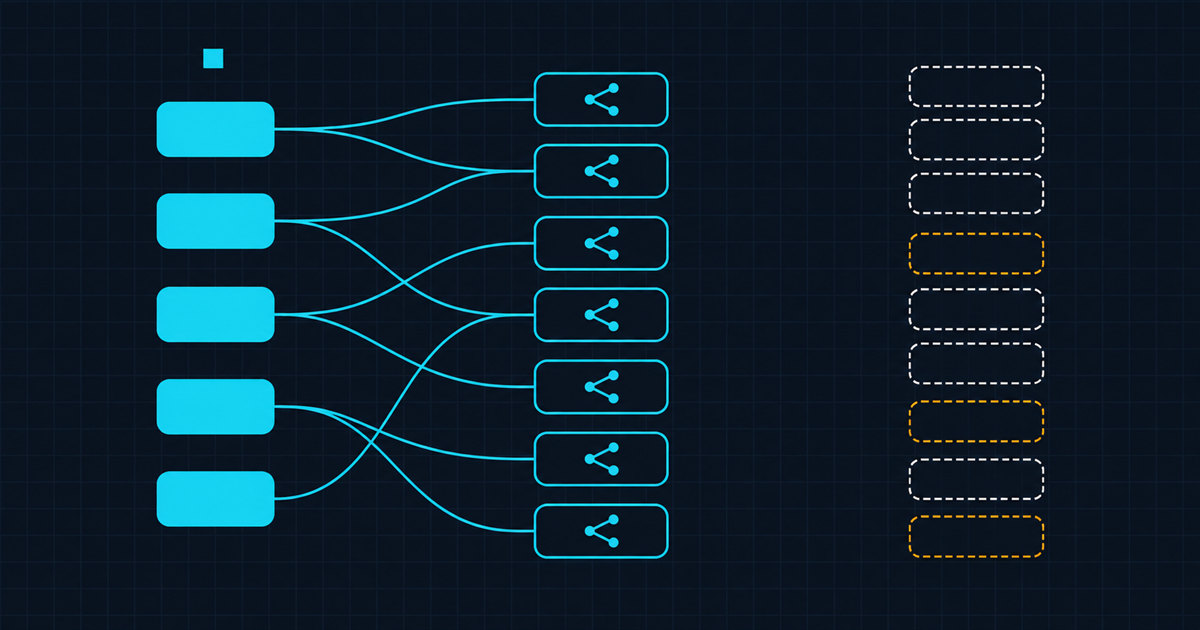
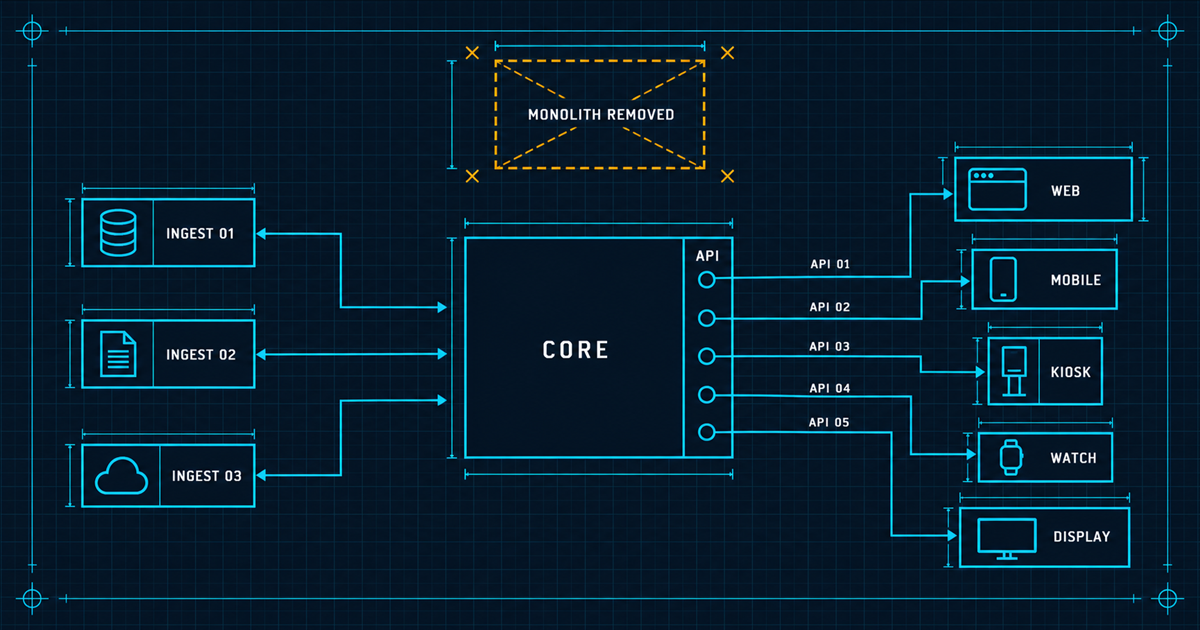
    Short answer: headless DAM means the API is the product and the web interface is one client of it, with no privileged access. The test is simple. Anything a user can do in the interface, you can do over the API, with the same permissions model and the same validation. If there is a gap, the API is a reporting layer with delusions, and every integration you build will eventually hit the edge of it.

    An orthographic schematic of a core block with an API port array feeding five consumer panels, with the space where a monolithic front end would sit left as an empty dashed outline

    Why this became the architecture rather than a preference

    Ten years ago the DAM was a destination. People logged in, browsed, downloaded, and took the file somewhere else. The interface was the product because the interface was where the work happened.

    That is no longer where the work happens. Assets are consumed by a commerce platform, a headless CMS, a mobile app, a partner portal, a print automation pipeline, an email service, and increasingly by agents assembling pages without a human in the loop. Every one of those is a machine reading a machine. None of them can use a login form.

    So the interface stopped being the product and became one consumer among many, usually not even the busiest one. A platform whose capabilities live primarily in its interface is a platform whose capabilities are unavailable to most of its actual traffic.

    The four questions

    Ask these in the technical evaluation. They are quick, they are answerable in a live session, and they separate the field fast.

    1. Is the interface built on the public API? Open the browser network tab, perform an action in the vendor’s own interface, and look at what it calls. If those are documented public endpoints, the API is real and it is exercised by the vendor’s own team every day. If they are private endpoints with a different auth scheme, you are getting a second-class API and it will lag the interface forever.

    2. Can you define and enforce schema over the API? Not just read and write field values, but define the fields, their types and their controlled lists, and have those validated on every write path. If validation lives only in the upload form, then every integration is a bypass and your data quality is a function of developer discipline.

    3. Is search a real query interface? Filtering by folder is not search. You want expressions over your own metadata fields, with boolean composition, sorting and pagination that works past the first thousand results. The Cloudinary Admin API exposes resource search as a queryable expression rather than a folder walk, which is the shape to look for.

    4. What is the SDK and documentation situation? An API you have to hand-roll HTTP against is an API that will be integrated once, badly, by whoever is available. Breadth matters here because you will not get to choose which language the next consuming team writes in. Cloudinary publishes SDKs across roughly seventeen languages and frameworks, which is at the upper end of the category and worth using as a benchmark when a vendor tells you their two SDKs are sufficient.

    An isometric matte cube with six machined sockets of different key shapes and six floating connector plugs, one of them amber and matching nothing

    Delivery is part of the API surface

    This is the part that gets separated in evaluations and should not be.

    In a classic DAM, retrieval means download. You call an endpoint, you get bytes, and then it is your problem: resize it, convert it, cache it, put it on a CDN, invalidate it when it changes. That is four systems and a cache invalidation bug waiting to happen.

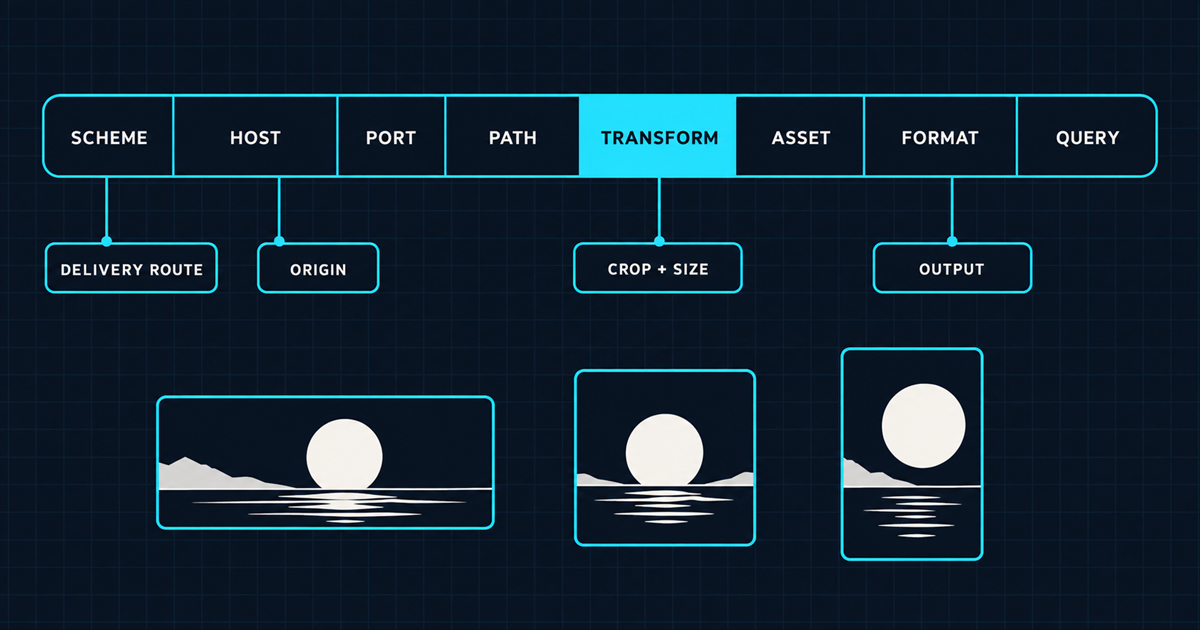
    In an API-first media platform, the delivery URL itself is the interface. You express what you want as parameters and the correct derivative is produced and cached at the edge. The Cloudinary transformation reference is the full parameter vocabulary, and advanced URL delivery options covers the addressing rules.

    The practical consequence is worth stating plainly, because it is easy to read this as a convenience feature. When a rendition is a URL parameter, no second file exists. Nothing to store, nothing to keep in sync with the master, nothing to purge when the master changes, nothing to migrate. A new channel with a new aspect ratio is a string change, not a batch job. That is the difference discussed at more length in delivery is part of your DAM.

    What about agents?

    This is genuinely new and worth a paragraph rather than a section, because the hype exceeds the shipped reality in most places.

    More of the software that consumes your assets is now written by, or driven by, language models. That changes what “good API” means in one specific way: the model has to be able to work out how to use it from documentation alone, in one pass, without a human debugging its first three attempts.

    Practically that means predictable URL structure, documentation served as markdown rather than a client-rendered application, and machine-readable descriptions of what the platform can do. Cloudinary ships an LLM and MCP integration layer covering exactly this: a set of remote Model Context Protocol servers, an llms.txt, and a rules file that steers models toward syntactically correct transformation URLs rather than plausible-looking wrong ones.

    Whether that matters to you depends on how much of your integration work is now agent-assisted. For most enterprise teams the honest answer in 2026 is “some, growing”. It is not a reason to select a platform on its own. It is a reasonable tiebreak, and it is a decent proxy for whether the API was designed to be read by something that has never seen it before.

    A URL anatomy bar broken into eight labelled segments with callouts, and three preview rectangles of different aspect ratios fanning out below

    Authentication, because this is where pilots die

    Two things to confirm before you build anything.

    Server-side signing for writes. Any upload path that runs from a browser needs signed requests generated server-side, so credentials never reach the client. Signed uploads is the standard pattern and every serious platform has it. If a vendor suggests putting an API key in your front-end, that is a complete answer to the evaluation.

    Standards-based delegation for user-facing access. If people will access assets through your own applications, you want OAuth 2.0 with OpenID Connect for identity and JWT for token format, not a proprietary scheme. Proprietary auth is the single most reliable predictor of an integration that takes three times its estimate.

    When headless is the wrong call

    Two situations where an API-first platform is genuinely a worse fit, and it is worth naming them.

    Your primary users are non-technical and the interface is the workflow. If the brand team, the agencies and the regional marketers spend their day in the DAM itself, browsing, collecting and downloading, then interface quality is not a nice-to-have and you should weight it accordingly. Some API-first platforms have thin interfaces because their centre of gravity is elsewhere. That is a real trade-off, not a flaw.

    You have no engineering capacity. An API is only an asset if someone can use it. If the DAM will be run entirely by a marketing operations team with no developer support, a well-designed closed suite with pre-built connectors will serve you better than a superior API you cannot call. This is one of the honest splits in the platform comparison.

    For everyone else, the API is the part of the system that will still be load-bearing in eight years, long after the interface has been redesigned twice. Weight it accordingly, and see integration patterns for an enterprise DAM for what you will actually build on top of it. The wider argument for keeping one master addressable by everything is in single source of truth is an architecture, and if you are earlier than that, start with what enterprise DAM actually is.

    Related field note

    Continue with Procurement scorecards: the failure mode teams miss.

  • A DAM governance framework that survives an audit

    A DAM governance framework that survives an audit

    The auditor asks a simple question. Show me every asset published to a customer-facing channel in the last quarter that used third-party licensed material, and show me the licence was valid on the publication date.

    If answering that takes three weeks and four people, you do not have governance. You have a policy document and a lot of goodwill.

    Short answer: DAM governance is a set of named controls, each with an owner, each producing evidence as a by-product of normal operation rather than on request. If a control depends on a person remembering to do something, it will fail, and it will fail silently. Design so that the evidence is a side effect of the workflow, and the audit becomes a query.

    An empty corporate boardroom at night with one closed folder on the table and a wall control board of indicator lights, four of them amber

    What governance is not

    Three things get mistaken for governance and none of them is.

    A policy document. Necessary, insufficient. A policy that is not enforced by a system is a statement of intent, and auditors have learned to treat it that way. The question is never “do you have a policy”, it is “demonstrate the control operated”.

    A steering committee. Useful for decisions, useless as a control. A committee that meets quarterly cannot govern an operation that ingests two thousand assets a month.

    Permissions. Access control is one control among a dozen. It answers who could act, not whether what happened was correct. Plenty of compliant-looking libraries are full of expired material that everybody had every right to upload.

    The control set

    Six control families, in the order they tend to fail. Each one needs a named owner, an operating frequency, and a defined evidence artefact.

    1. Ingest control. Nothing enters without required metadata and a declared rights status. This is the cheapest control in the entire framework and the one with the highest leverage, because everything downstream depends on the fields being there. Enforce it at the API, not just the upload form, or your integrations become the hole. The field model this depends on is in the metadata schema an enterprise actually needs.

    2. Approval control. An asset is not publishable until a named role has approved it, and the approval is recorded with an identity and a timestamp. The common failure here is approval by email, which is an approval that does not exist as far as the system is concerned.

    3. Rights control. Licence terms are held as structured data with a real expiry date, and expiry triggers an action rather than a report. Reports are read by nobody. This deserves its own treatment and gets it in rights and expiry as first-class asset data.

    4. Access control. Identity comes from the corporate directory, groups derive from directory groups, and the leaver process removes access without anyone in the DAM team being involved. Anything else and your access review is fiction. Covered properly in access control, SSO and audit trails.

    5. Retention and disposal control. Assets have a defined retention period and something happens at the end of it. This is where most frameworks stop being real, because deletion is frightening and nobody wants to own it. Records management as a discipline has thought about this for a century and the general principles transfer directly.

    6. Change control. Schema changes, vocabulary changes and permission model changes go through a documented path. Without this, the taxonomy quietly mutates and your historical data stops meaning what it meant.

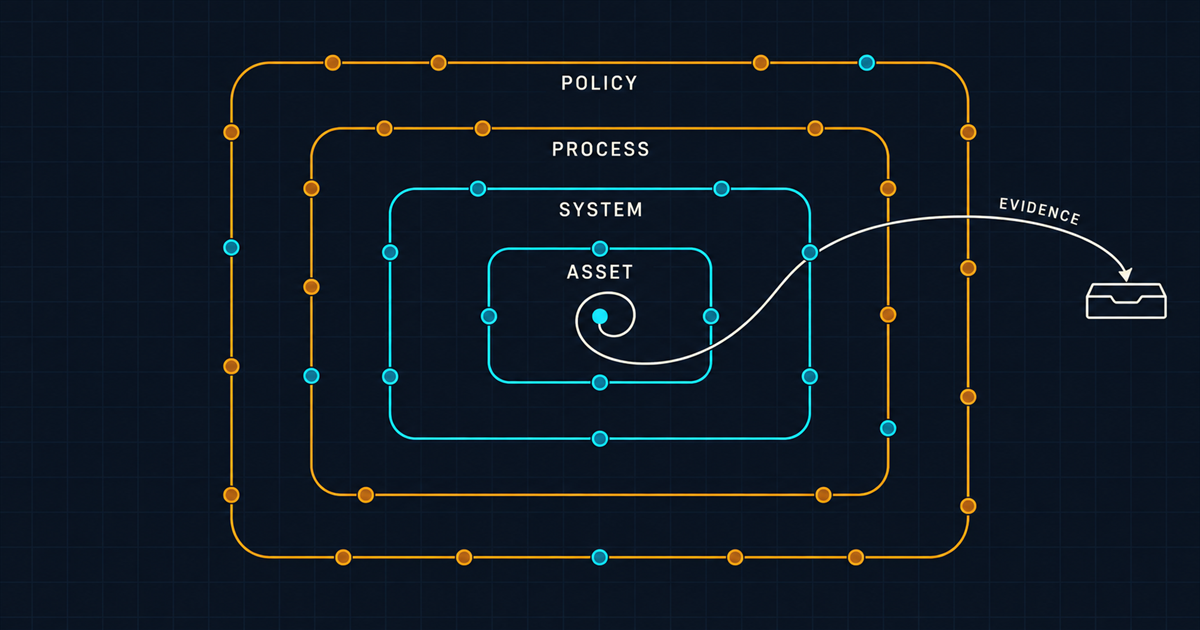
    A control framework figure of four concentric rings labelled policy, process, system and asset, with amber manual control points clustered on the outer rings

    Automated versus manual, and why it matters more than it sounds

    Sort every control into two buckets: those the system performs, and those a person performs.

    The manual ones will degrade. Not because people are careless, but because manual controls depend on load, staffing and attention, and all three vary. A control that runs correctly ninety-five percent of the time is a control with a five percent finding rate, and auditors sample.

    So the design instruction is straightforward. Any control that can be automated must be, and the ones that cannot be automated need compensating detection. If a human decides whether an asset is on-brand, you cannot automate the judgement, but you can automate the fact that the judgement was recorded, by whom, and when.

    This is why the platform choice is a governance choice rather than a procurement one. Controls you can express in the system hold. Controls you express in a wiki page do not.

    Two capabilities carry most of the automation weight in practice:

    • Upload presets or equivalent, so that ingest rules are enforced server-side regardless of which client is uploading. Cloudinary upload presets are a workable reference for the pattern: the rule lives with the platform, not with each integration.
    • Event notifications, so that a state change can trigger downstream action rather than waiting for someone to notice. Webhook-style notifications turn expiry and approval from reports into workflow.

    Neither is exotic. Both are worth confirming in a demo, because “we support that” and “show me the server rejecting a non-compliant upload” produce different answers surprisingly often.

    A note on what governance cannot do at asset level

    Be careful about what you promise the risk committee here, because there is a gap between how governance is usually described and what most platforms actually enforce.

    In most enterprise DAM products, including Cloudinary, permissions are administered at the folder or collection level rather than per individual asset, with folder modes determining how assets inherit their placement. That is a perfectly workable model, and it is how the majority of real deployments run. It is not the same thing as per-asset entitlement that a system can evaluate at request time.

    If your control design assumes each asset carries its own independently queryable permission set, validate that assumption against the product before you write it into a framework. Designing your folder structure to match your permission boundaries is the practical answer, and it is much easier to do at the start than to retrofit.

    How do you make the audit a query?

    Work backwards from the questions you will be asked. There are usually about eight, and they are stable across audits.

    1. Who has access to what, and when was that last reviewed?
    2. What changed, by whom, when?
    3. Which published assets carry third-party rights, and were those valid at publication?
    4. What is past its retention date and still present?
    5. Which assets were approved, and by whom?
    6. What was deleted, by whom, and was it authorised?
    7. Which integrations can write to the system, and under whose credentials?
    8. When did we last test that the controls above actually operate?

    For each one, name the query and the person who can run it. If the answer involves exporting to a spreadsheet and reconciling by hand, that control is not operating, it is being reconstructed. The difference matters enormously to an auditor and not at all to anyone else, which is why it goes unnoticed until the week it does not.

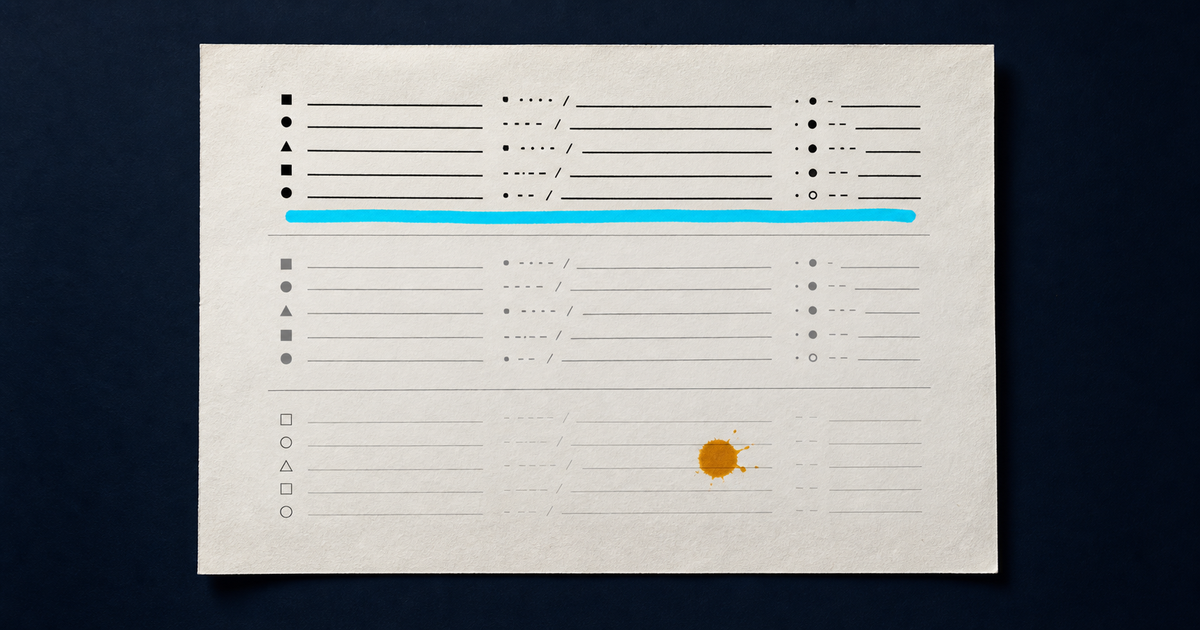
    A fan of off-white audit request sheets with an empty checkbox column, two cyan ticks near the top and one amber annotation at the bottom

    Mapping to the frameworks you are already assessed against

    You almost certainly do not need a bespoke DAM control framework. You need to express DAM controls in the language of the frameworks your organisation already reports against.

    NIST SP 800-53 gives you the control catalogue with identifiers your security team already uses, and the NIST Cybersecurity Framework gives the functional grouping. If you report SOC 2, the trust services criteria map onto the access, change and monitoring controls above almost directly. Where personal data is depicted in your assets, and in a photography library it always is, GDPR obligations attach to the images themselves, not only to the database rows.

    Doing the mapping is a day of work and it removes an entire category of argument. Your controls stop being a DAM thing that security has to evaluate from scratch and become three lines in a register they already maintain.

    Who owns this

    One person. Named. With time allocated.

    Governance distributed across everyone is governance owned by nobody, and it is the single most reliable predictor of a framework that looks complete on paper and produces findings in practice. The role is usually a DAM manager or information governance lead, it is roughly a third of a full-time job at mid enterprise scale, and leaving it unstaffed is the most common reason rollouts fail after a successful launch.

    If you are still assembling the case for the platform underneath all this, the foundation is in what enterprise DAM actually is.
  • Why the shared drive stops working, and what replaces it

    Why the shared drive stops working, and what replaces it

    There is a folder on every corporate network called FINAL. Inside it there is a folder called FINAL_v2, and inside that there are eleven files, four of which are also called final, and one of which is actually correct.

    Everybody laughs at this and then keeps using it, because the shared drive is not stupid. It is fast, it is already there, and for a small team it genuinely works.

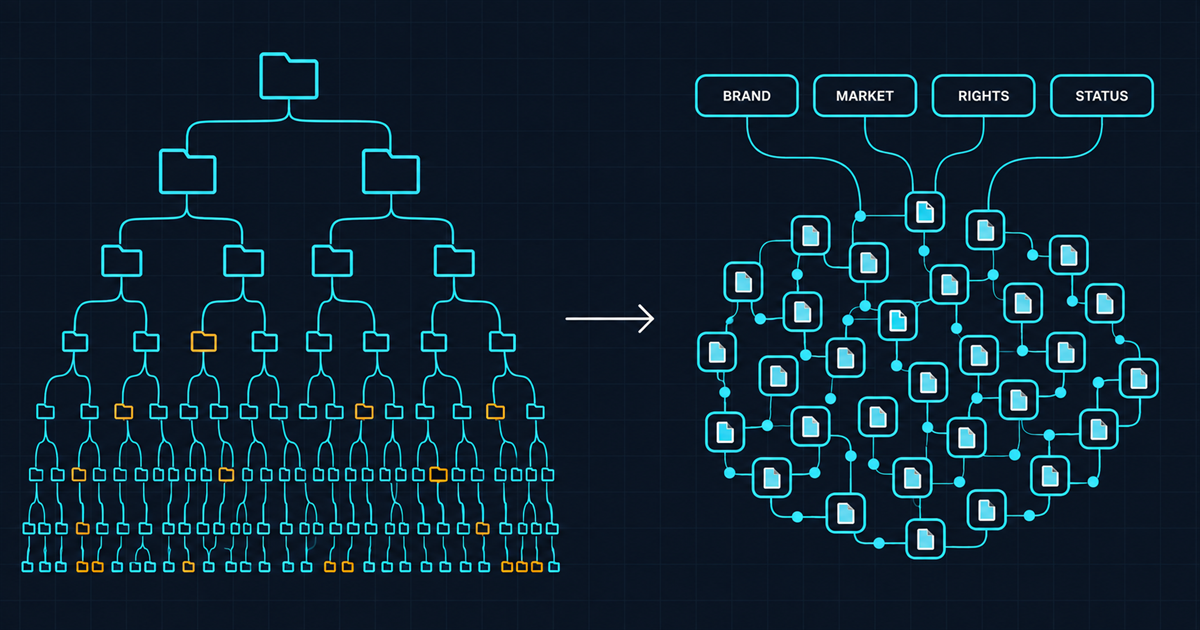
    Short answer: a file server breaks when the folder path becomes the only place meaning is stored. Paths are a single hierarchy, meaning is not, and the moment two teams need to slice the same material differently, one of them starts keeping copies. Everything that follows is downstream of that. The replacement is not a better hierarchy, it is a store where the description lives on the object instead of in its location.

    A tidy file tree collapsing into duplicated leaf nodes on the left, and the same content redrawn on the right as a flat pool of asset nodes attached to brand, market, rights and status facet chips

    The single-hierarchy problem

    A path is one classification, chosen once, applied forever. /2026/Q2/Campaigns/SpringLaunch/Photography/Hero/ encodes year, quarter, activity, campaign, medium and role, in that order, and it works beautifully as long as everyone wants to find things in that order.

    They do not. The regional team thinks in markets. Legal thinks in contracts and expiry dates. The commerce team thinks in SKUs. The web team thinks in placements. Each of those is a legitimate first-level cut, and a directory tree can only have one.

    What happens next is predictable:

    • Someone creates a parallel tree organised their way, containing copies.
    • Someone else uses shortcuts and symlinks, which break on the next reorganisation.
    • Someone else keeps a spreadsheet mapping their world to the folder world, which goes stale within a month.
    • The rest email each other files.

    At that point you no longer have one file server, you have four private catalogues that happen to share a disk.

    Why adding search does not fix it

    The instinctive response is to bolt an index on top. Index the drive, expose a search box, done.

    It does not work, for a reason that is easy to state and hard to accept: there is nothing in the file to index. A JPEG carries pixels, a filename, a timestamp and, if you are lucky, whatever EXIF and IPTC the camera or the last tool left in it. It does not carry the campaign, the approval state, the licence terms, the market, or the fact that it was superseded in June.

    You can verify this on your own material in about a minute with ExifTool. Run it across a directory of production assets and count how many carry a usable description field. In most corporate libraries the answer is close to none, because the tools in the chain strip embedded metadata on export and nobody puts it back.

    So the index returns filename matches and pixel similarity. Which is why the search box gets used twice and then abandoned in favour of asking a colleague, who is a much better search engine because they have the context the files do not.

    Extreme macro of a stack of near-identical translucent film sheets seen edge-on, one faintly amber in the middle

    The four costs, in the order they show up

    Duplication. The first and most visible. Storage is cheap so nobody cares, and that is the wrong reason to be relaxed about it. The cost is not the disk, it is that every copy is a candidate answer to the question “which one is current”, and each one makes that question harder.

    Rework. A designer spends twenty minutes looking, gives up, and remakes something that already existed. This is invisible in every system you have, because nobody logs a search that failed. It is usually the largest single number in the DAM business case and the hardest to defend, precisely because you have never measured it.

    Rights exposure. A file server cannot express “usable in Germany until March 2027”. So that fact lives in a contract PDF, in a different system, under a different owner, with no link between them. The failure is not that someone breaks the rule. It is that nobody can check it.

    Migration debt. Every year you stay, the mapping problem gets worse. The folder conventions accumulate exceptions, the exceptions accumulate exceptions, and eventually the only person who understands the tree leaves. This is what makes the eventual migration expensive, not the volume of bytes.

    What actually replaces it

    Not a nicer tree. A different data model.

    Meaning attaches to the object, not the location. The asset carries its own fields. Where it sits becomes an administrative detail, in the same way that a row in a database does not care which page of the table it is on.

    Classification is multi-dimensional. Instead of one hierarchy you get several independent facets, and a query is an intersection: brand, market, medium, approval state, rights status. Any of them can be the first cut, so no team needs a private copy. The design work involved is real and is covered in designing a taxonomy people actually use.

    One master, derived outputs. The 400px crop is not a file next to the original. It is a request against the original. Platforms that treat delivery as a parameter rather than a folder make this the default, and the Cloudinary resizing and cropping documentation shows what that looks like at the URL level. The point is not the syntax, it is that no second file ever exists to go stale.

    The system is addressable. A file server has no useful API. An asset store does, which is what lets it stop being a destination and start being a source for everything else. That is the argument in single source of truth is an architecture.

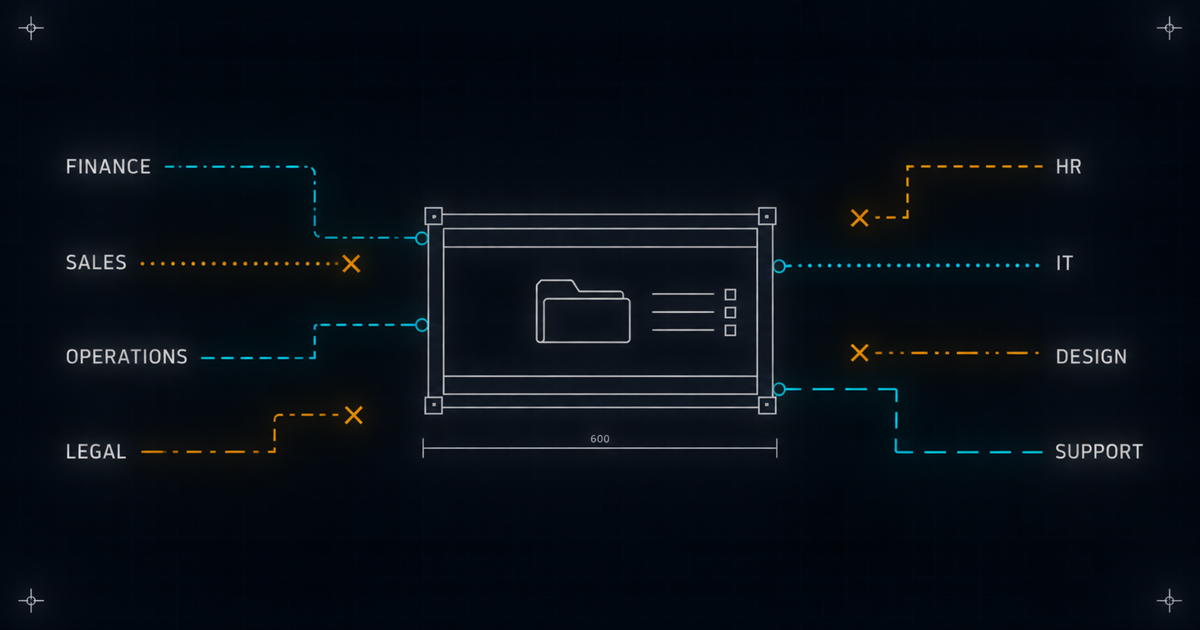
    Engineering schematic of a shared network drive with eight departmental access lines, four amber and terminating in X markers

    When is a shared drive still the right answer?

    More often than the vendors would like, and it is worth saying plainly.

    Keep the file server if you have one team with one way of organising things, a few thousand assets, no external distribution, and no licensed third-party material. Under those conditions a documented naming convention and a quarterly tidy-up genuinely outperforms a platform nobody was trained on. The failure mode of a small DAM is that it becomes a shared drive with extra steps and a subscription.

    The threshold is not asset count. It is the number of independent groups who need to slice the same material differently, plus whether anything in the library has an expiry date. Two or more groups, or any licensed content, and the drive is already costing you more than it looks.

    The honest transition

    You do not migrate a shared drive. You migrate the material you can describe, and you leave the rest.

    Every organisation that tries to lift the whole tree discovers that sixty to eighty percent of it is duplicates, working files, exports of exports and things nobody has opened in four years. Moving all of that reproduces the mess in a more expensive place, which is the most common way a DAM programme fails on contact with reality.

    Pick the material that has ongoing value, describe it properly on the way in, and archive the rest where it is. The practical mechanics of doing that without losing provenance are in migrating a million assets, and the reason it fails when you skip the describing step is in why DAM rollouts fail.

    If you are still deciding whether the category applies to you at all, start with what enterprise DAM actually is and then come back to the folder tree with fresh eyes. It looks different once you have named what it is not doing.

  • What enterprise digital asset management actually is

    What enterprise digital asset management actually is

    Ask a large organisation where its logo lives and you will get four answers, all sincere, all different. The brand team points at a folder. The web team points at a CMS. The agency points at a link they were sent in 2024. Procurement points at a platform nobody logs into.

    Short answer: enterprise digital asset management is the system of record for your visual material. Not the biggest folder, not the nicest gallery. The one place that can answer what an asset is, what is allowed with it, which version is current, and where it has been used, for everybody, with the same answer every time. Everything else in the category is a feature of that.

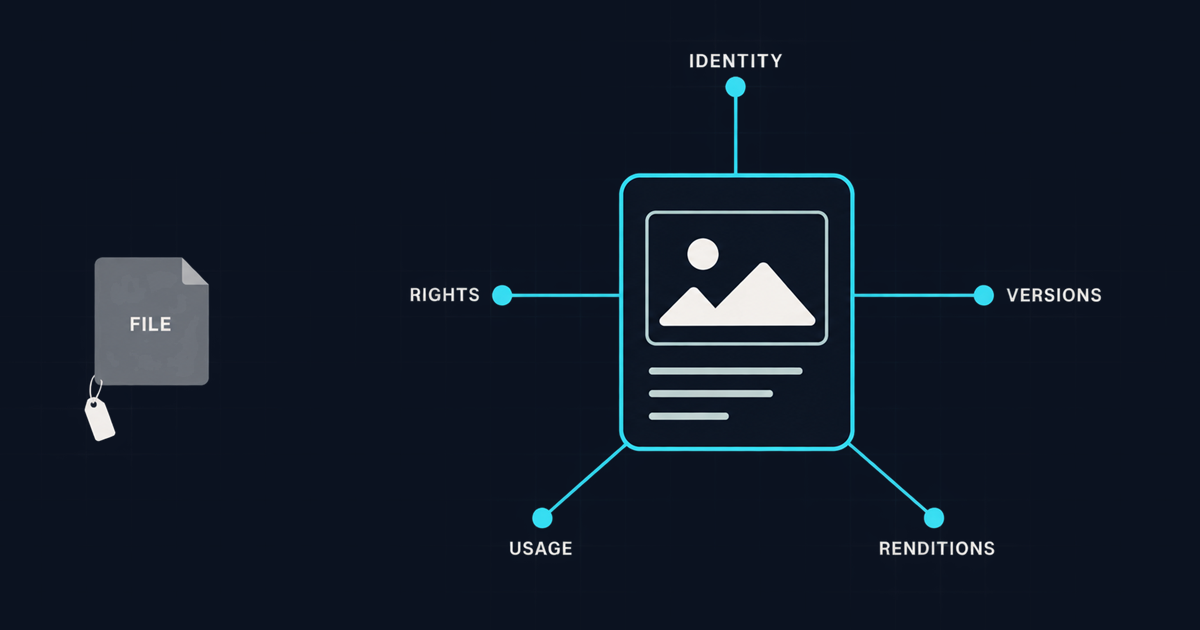
    An asset card at centre with five labelled connectors reading identity, rights, versions, usage and renditions, beside a small grey rectangle labelled file with one ragged filename tag

    That framing matters more than it sounds. It moves the conversation off storage, which is cheap and solved, and onto the thing that is actually failing, which is agreement.

    The failure mode nobody puts in the business case

    The stated problem is usually “we can’t find things”. That is a symptom. The condition underneath it is that the organisation has no authoritative answer about its own material, so every team constructs a private one.

    You can see the shape of it in any company past about two hundred people:

    • Duplication as a coping mechanism. People keep local copies because they do not trust the central one to still be there, or to still be right. Every copy is a small fork of the truth.
    • Rights held in someone’s head. A photographer’s licence expired eighteen months ago. The image is on a regional landing page. Nobody in the chain between the contract and the page knows both facts.
    • Version drift across channels. The product shot on the website, in the catalogue, and in the reseller portal are three different crops of two different masters, and none of them is wrong enough to notice.
    • Rework as a line item. A designer recreates something that already exists because finding it would have taken longer than remaking it. This cost is real, recurring, and almost never measured.

    None of those is a storage problem. All of them are a knowledge problem, and knowledge has to be attached to the thing itself or it evaporates.

    What an enterprise asset has to carry

    Use this as the test you hold any platform against, including the one you already own. An asset should know five things about itself, independently of who is holding it:

    • Identity. What it is. Format, dimensions, what is depicted, who made it, which campaign or product or shoot it belongs to, what language it is in.
    • Rights. What is permitted, in which territories, until when. Model releases, photographer licences, music terms, embargo dates. This is the field group with legal exposure attached and it is the one most often left blank.
    • Versions and lineage. Which iteration this is, what it was derived from, what supersedes it. A single product launch generates dozens of near-identical exports and exactly one of them is correct.
    • Usage. Where it has been published, by whom, in what context. Without this you cannot recall an asset, and recall is the whole reason the rights fields exist.
    • Renditions. How it is allowed to appear. Crops, formats, sizes, and the rules that produce them, rather than a folder of pre-baked copies that immediately diverge.

    A system that stores terabytes reliably and describes them poorly is an expensive shelf. The general definition of digital asset management covers ingest, annotation, storage, retrieval and distribution, which is accurate and quietly flattens the two parts that cost money: annotation, which is human time, and distribution, which is machine time.

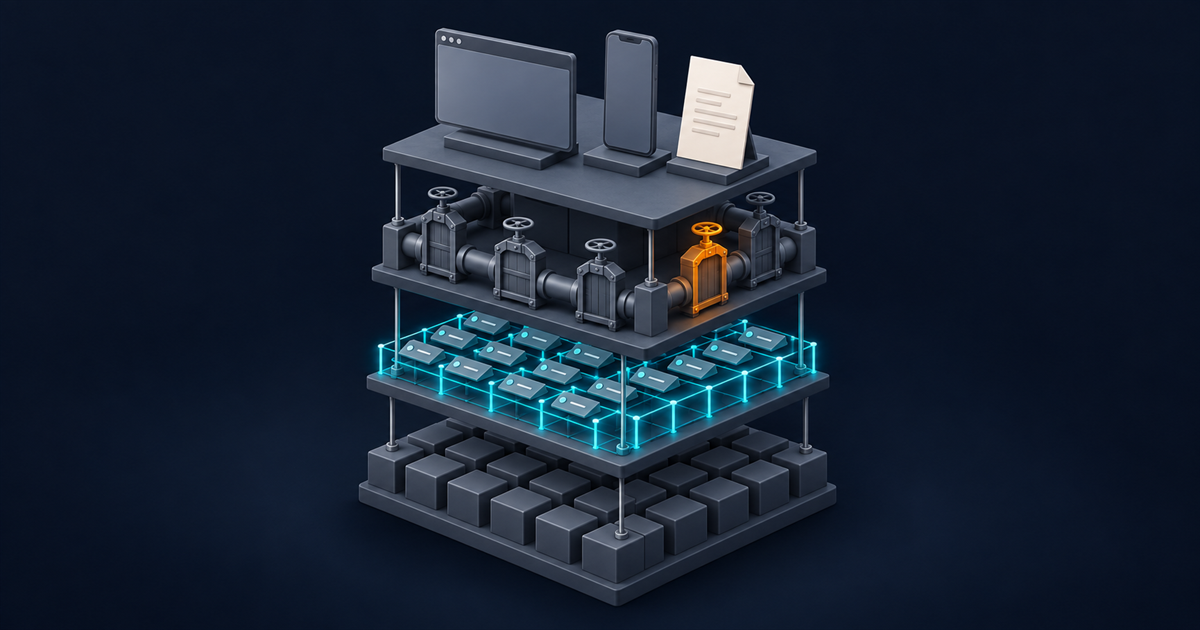
    An isometric cutaway of a four-tier stack: storage blocks, a metadata lattice, a governance ring, and three delivery surfaces, with only the metadata lattice lit

    What makes it “enterprise” rather than just DAM

    The word is doing real work. Four things change at scale, and each one breaks a tool that was adequate at forty users.

    Multiple owners with legitimate disagreements. Brand, legal, product marketing, regional teams and agencies all have a claim on the same asset and different rules about it. A single flat permission model cannot express that, and a system that forces one will be routed around.

    Federated identity. Nobody is creating accounts by hand. Access has to come from the corporate directory through single sign-on, with groups and roles derived from what HR already knows, or the leaver process silently fails.

    Audit as a standing requirement. Not “can we find out who did this” but “can we produce evidence on request, within a window, without a project”. That is a different engineering problem, and it is covered properly in access control, SSO and audit trails.

    Integration is the deliverable. At enterprise scale the DAM is never the destination. It feeds the commerce platform, the CMS, the print pipeline, the partner portal and half a dozen regional sites. If it cannot do that cleanly it becomes a well-organised dead end, which is why integration architecture deserves more attention in selection than the interface does.

    Is enterprise DAM just a shared drive with better search?

    No, and the difference is structural rather than cosmetic.

    A file server stores bytes under a name. All the meaning lives in the folder path, which means it lives in a convention that one person invented, nobody wrote down, and everyone applies differently. Search over that gives you filename matching, which is why people fall back to asking a colleague.

    A DAM stores an object with fields, and the fields are queryable independently of where the object sits. That is the whole difference: you can ask for approved product photography, cleared for the German market, from the current season, without knowing anybody’s folder convention. The longer version of that argument is in why the shared drive stops working.

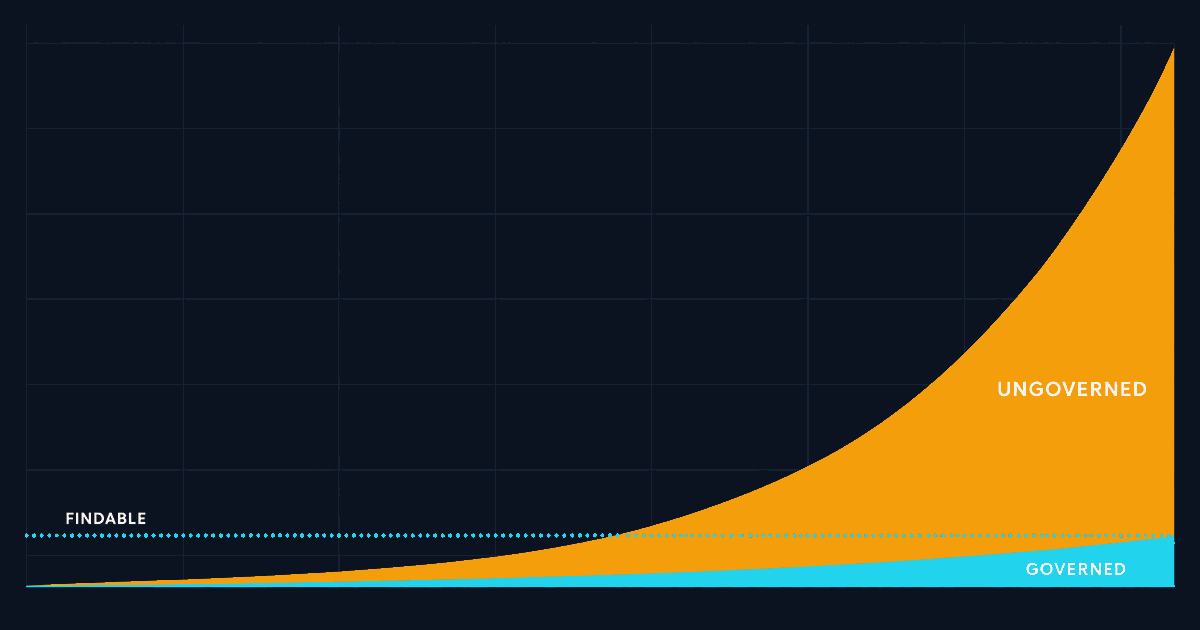
    A stacked area chart with a thin cyan governed band under a much larger amber ungoverned band, and a low flat findable line

    Where it sits in the enterprise stack

    DAM is one of four systems that all look like each other from a distance and own genuinely different records. Product data belongs in a PIM. Page structure and copy belong in a CMS. Golden records for customers, products and suppliers belong in master data management. Visual material and its rights belong in the DAM.

    The boundaries blur at the edges and most implementation pain lives exactly there, which is why it gets its own treatment in who owns which record.

    The architectural decision underneath everything

    There are two ways to run this, and the choice determines your cost curve for the next five years.

    Stored variants. Every crop, format and size is a file somebody created and somebody now has to keep. One master becomes fifteen artefacts, all of which diverge the moment the master is re-shot, most of which are never used, all of which are counted in your storage bill and your search results.

    Derived renditions. There is one master and a set of parameters. The 400px thumbnail, the square social crop, the AVIF version: each is produced on request from the original and cached. Platforms built around this model expose it as part of the delivery URL, and the Cloudinary transformation reference is a reasonable place to see what the parameter set looks like in practice.

    The consequence people underestimate is not storage cost. It is that when a rendition is a parameter, adding one costs nothing and retiring one costs nothing. When it is a file, both are projects with a ticket queue.

    When you do not need this

    Be honest about the threshold. You do not need an enterprise DAM if:

    • You have one team, under a few thousand assets, and everyone sits in the same tool already. A well-run folder structure with a naming convention genuinely works at that size.
    • Your material has no rights complexity. If everything is owned outright and used forever, the highest-value field group is empty and you are buying a filing cabinet.
    • You have no second channel. A single website with a single CMS does not need a separate system of record for its own images.

    The moment any two of those stop being true, the cost of not deciding starts compounding. That is usually before anyone notices, which is why the requirements checklist is worth running early rather than after the first rights incident.

    Where to start

    Do not start with a vendor demo. Start with three questions you can answer this week:

    1. How many masters do we have, and how many copies of them? The ratio is your duplication tax. Anything above 3:1 is a governance problem, not a storage one.
    2. Which fields would we have to fill in before search became useful? If the honest answer is fifteen, your schema is wrong before you have bought anything. The shape of a workable one is in the metadata schema an enterprise actually needs.
    3. What happens today when a licence expires? If the answer involves someone remembering, you have found the thing the platform is actually for.

    Answer those and the shortlist writes itself. Skip them and you will run a nine-month selection process and buy the interface you liked most in the demo, which is roughly how the platform comparison ends up looking so different once you weight it by what you actually do.

    Related field note

    Continue with What to log in content supply-chain controls.

    Related field note

    Continue with A production teardown of regional asset access.

    Related field note

    Continue with The maintenance burden behind legal hold for media.