Somebody circulates the requirements matrix. It has 240 rows, gathered from every stakeholder who was asked, and every row is genuinely something someone wants. It goes to five vendors. All five score above ninety percent. The decision gets made on which demo felt better.
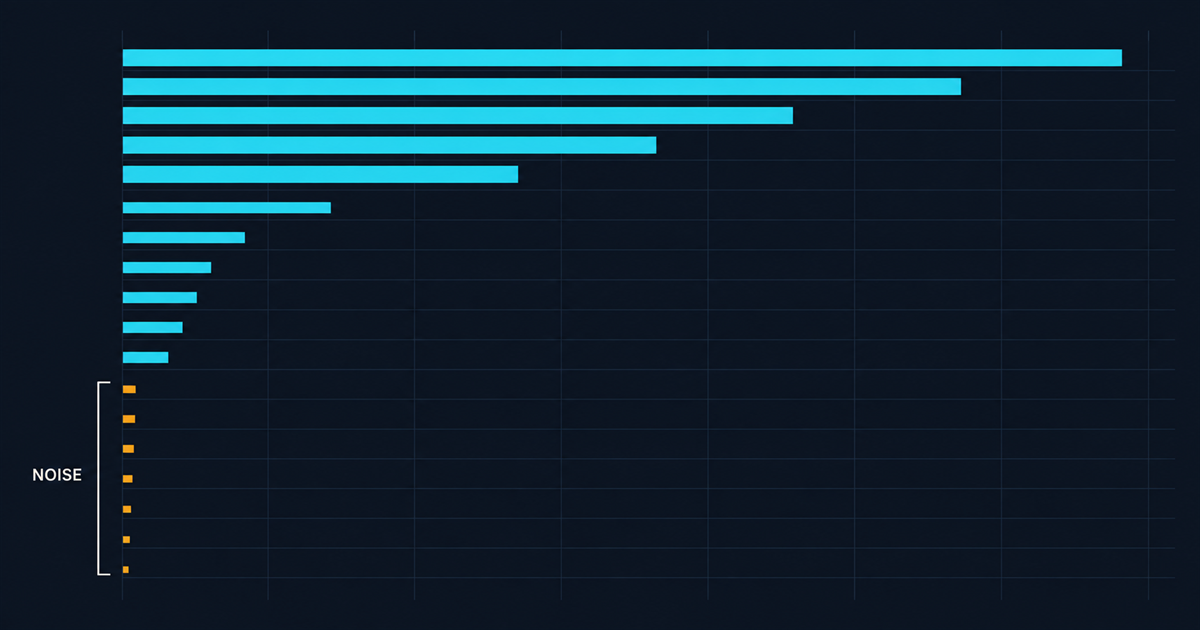
Short answer: a requirement only earns its place if a credible vendor could fail it. Most of a standard DAM matrix is table stakes that every serious platform satisfies, which means it contributes nothing except weight. Cut to the thirty or so requirements that actually separate the field, weight them by what you do rather than by who asked, and test the top ten rather than accepting a written answer.
The test for whether a requirement belongs
One question: could a vendor you would seriously consider fail this?
“Supports metadata” fails the test. Everyone supports metadata. “Enforces field-level validation on every API write path, not only in the upload interface” passes, because plenty of platforms do not.
Apply that question to your matrix and it will lose sixty to eighty percent of its rows. What remains is a document that discriminates, which is the entire purpose.
Two secondary tests worth applying to the survivors:
Is it observable? If you cannot design a test that demonstrates it, you will accept a written assurance, and written assurances are all identical.
Does it follow from something you actually do? Every requirement should trace to a workflow, an obligation, or a system in your estate. Requirements with no traceable origin came from a template.
The requirements that discriminate
Thirty-two, in six groups. Ordered so the highest-signal group comes first.
Architecture and API
- Is the vendor’s own interface built on the public API? Check the browser network tab during the demo. Private endpoints mean a second-class API forever.
- Can you define fields, types and controlled lists over the API, and are they enforced on every write path?
- Is search a queryable expression over your own fields, with boolean composition, sorting and pagination past a thousand results?
- How many SDK languages, and are they first-party and current?
- Are derivatives produced on request from a URL, or pre-generated and stored?
- Are delivery URLs versioned and immutable, so a replaced master produces a new address rather than requiring a purge?
- What events are emitted, and can they be subscribed to?
The reasoning behind this group is in headless DAM, and it is the group that predicts your integration cost over five years.
Metadata and taxonomy
- Are fields typed, with real dates and controlled lists, or is everything a string?
- Can a field be conditionally required based on the value of another field?
- Are controlled vocabularies managed as first-class objects, with synonyms, preferred terms and deprecation, in the sense ANSI/NISO Z39.19 means it?
- Can a term be retired and existing assets remapped without deleting data?
- Is automated analysis available on ingest, and can its output be directed to specific fields rather than a generic tag bag?
- Can you export the full schema and all values, in a documented format, without vendor assistance?
That last one is an exit requirement and it is the one vendors are least comfortable with, which is exactly why it belongs. The field model these support is in the metadata schema an enterprise actually needs.
Rights and lifecycle
- Are licence terms structured fields with indexed dates, rather than a document attachment?
- Does expiry change asset state automatically, or produce a report?
- Does expiry emit an event that downstream systems can act on?
- Are lifecycle states configurable, and is state exposed as a search facet?
- Is version history automatic, with old versions resolvable?
- Can you identify every asset depicting a given person, for privacy request execution?
Details in rights and expiry as first-class asset data and the asset lifecycle.

Security and identity
- SSO via SAML or OpenID Connect, with group membership driving roles?
- Does deprovisioning happen automatically when the directory record is terminated?
- Can external accounts be time-bound with a required internal sponsor?
- Does the audit log record reads and downloads, not only writes?
- Is the log exportable to your SIEM, and immutable to administrators?
- Can delivery be restricted so an unlisted URL is not an open one?
The one to test rather than ask about is deprovisioning. Take a real recent leaver and check. Full set in access control, SSO and audit trails.
Delivery
- Automatic format selection per browser, from one URL, covering AVIF and WebP?
- Automatic quality, tuned per image rather than a global setting?
- Content-aware cropping that keeps the subject?
- Arbitrary width on request, for responsive images at widths you cannot know in advance?
- What cache headers are set by default on derivatives?
- Does the delivery API return descriptive metadata, including alt text, alongside the asset?
That last one is missing far more often than you would expect and it is why so many properly-described libraries produce pages with empty alt attributes. Covered in delivery is part of your DAM.
Commercial and operational
- Is pricing published, and what is the overage rate in writing?
- Is renewal uplift capped in the contract?
- What is included in implementation, specifically, and what is time and materials?
- What is the documented exit path: full asset and metadata export, in what format, at what cost?
What to leave out
Four categories that consume evaluation effort and produce no separation.
Anything every vendor does. Upload, folders, search, preview, download, basic permissions, collections. Table stakes. Listing them makes the document longer and the decision no clearer.
Interface preferences. “Intuitive user interface” is not a requirement, it is a judgement, and it will be made in the demo regardless of what the matrix says. Handle it with a structured usability test on real tasks, scored separately.
Requirements derived from your current system’s quirks. “Must support our seven-level folder hierarchy” encodes a problem rather than a need. Ask what the hierarchy is for, and most of the time the answer is faceted search, as in designing a taxonomy people actually use.
Features nobody has asked for and nobody will configure. Every unused capability is licence cost and configuration surface. If no named person will own a feature, it is not a requirement.
Weight before you score
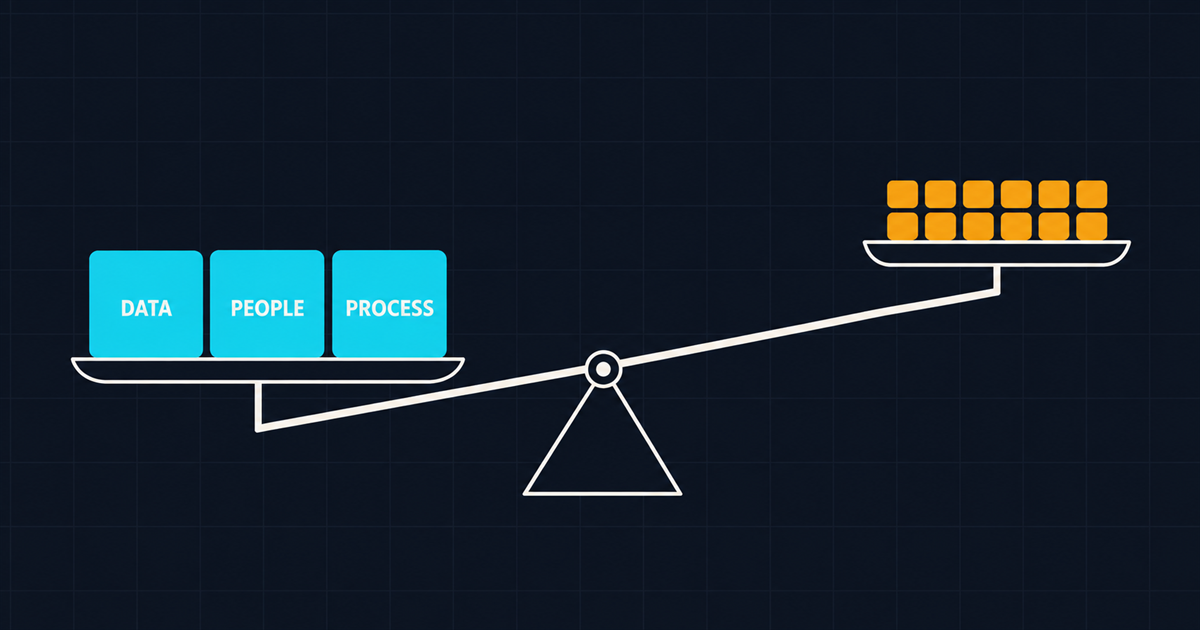
Unweighted matrices are how a platform wins on features nobody will use.
Do it in one session with the people who will actually run the system:
- Sort the surviving requirements into three tiers. Deal-breaker, important, nice. Cap deal-breakers at eight. If everything is a deal-breaker, nothing is.
- Weight by frequency of use. A requirement exercised daily outranks one exercised at audit time, unless the audit one carries legal exposure.
- Have each stakeholder group weight independently, then compare. Where marketing and engineering disagree sharply, you have found the real architecture decision, and it is worth an hour of argument now rather than a year of friction later.
Test the top ten, do not ask about them
For your eight to ten highest-weighted requirements, design a test and run it in a shared session with each vendor. Half a day per vendor.
The tests that consistently produce the most information:
- Upload one asset, request it at five widths in three formats by editing the URL, and time cold and warm responses.
- Define a new metadata field with a controlled list and a validation rule, then attempt an invalid write over the API and watch it be rejected.
- Replace a master and confirm existing references pick up the new version with no manual purge.
- Set a licence expiry in the past and observe what happens without human intervention.
- Ask for every download of a named asset in the last six months, and time how long it takes to produce.
Written responses are drafted by people who are good at drafting written responses. A live test is a fact.
Then take the results into the platform comparison to see which archetype your answers point at, cost it properly with what enterprise DAM costs, and translate it into a business case. If a traditional DAM turns out not to be what you need at all, alternatives to a traditional enterprise DAM is the honest version of that conversation, and the grounding for the whole exercise is in what enterprise DAM actually is.